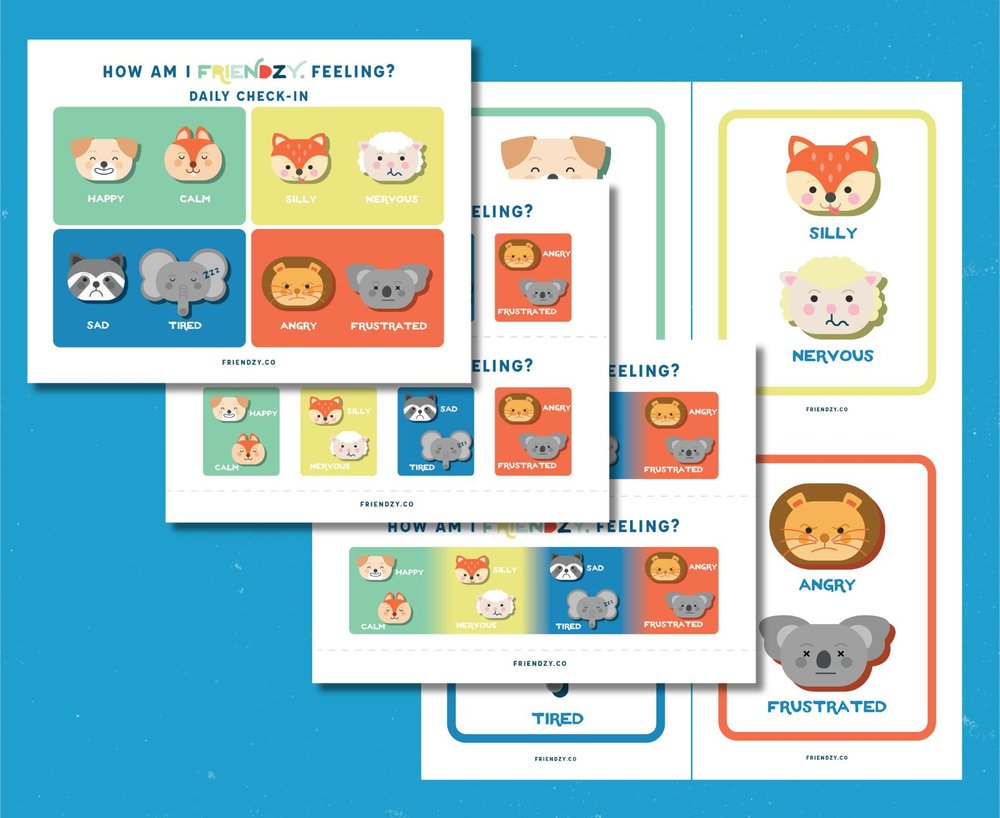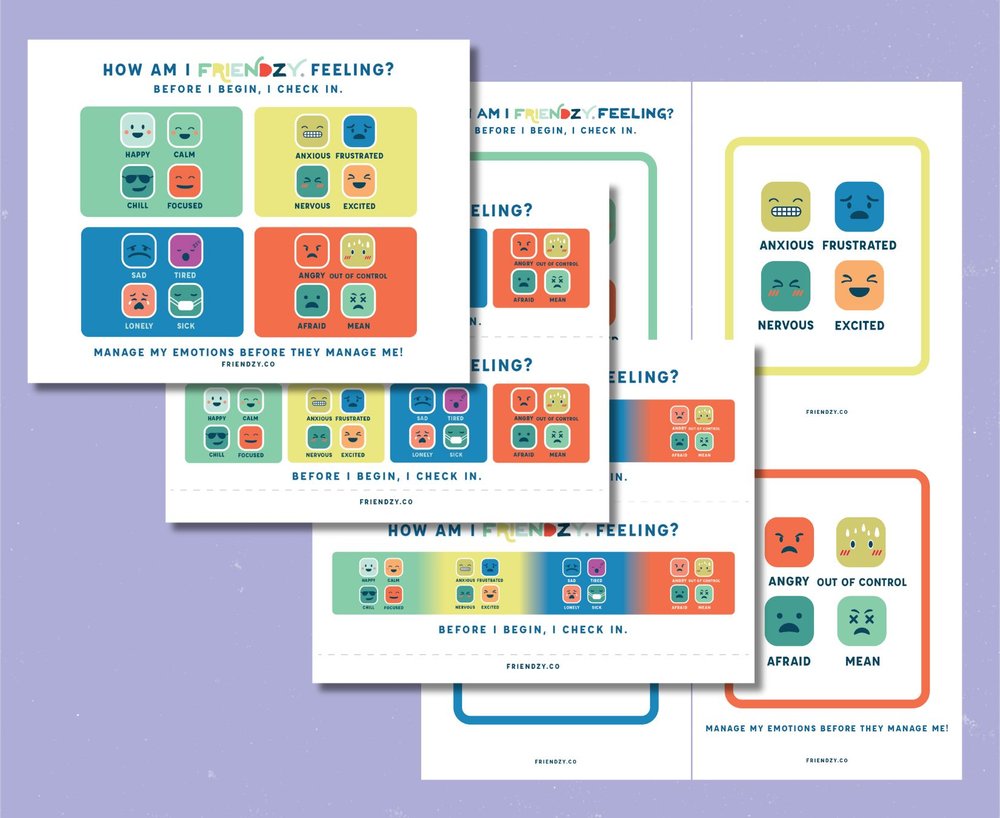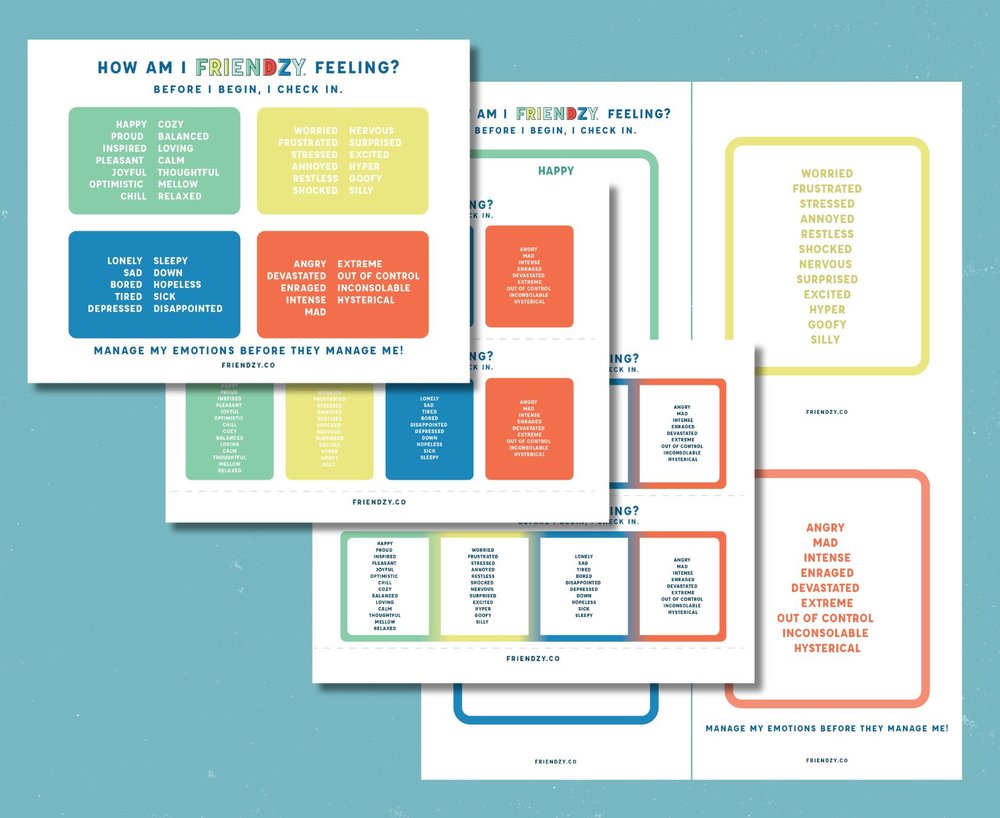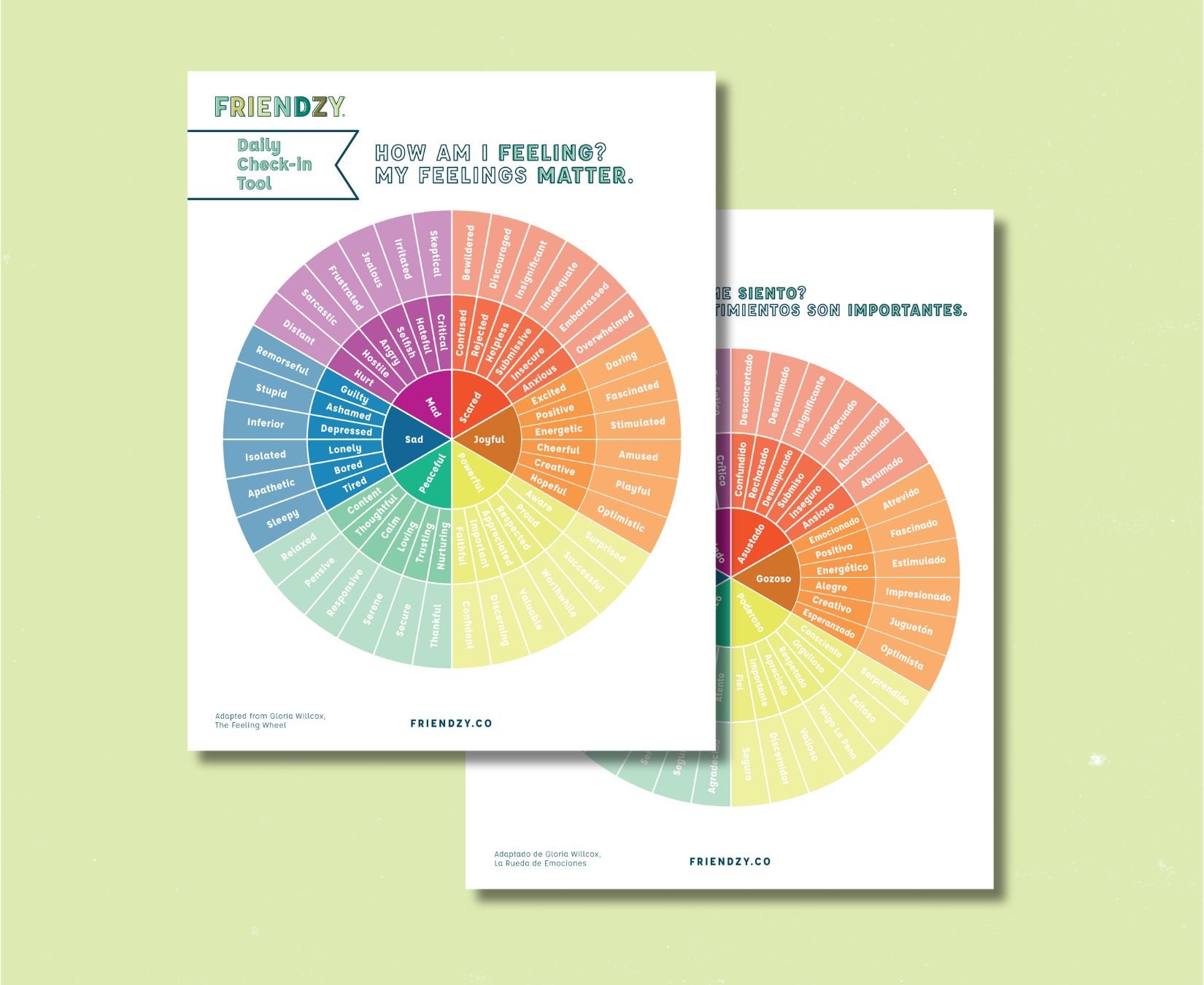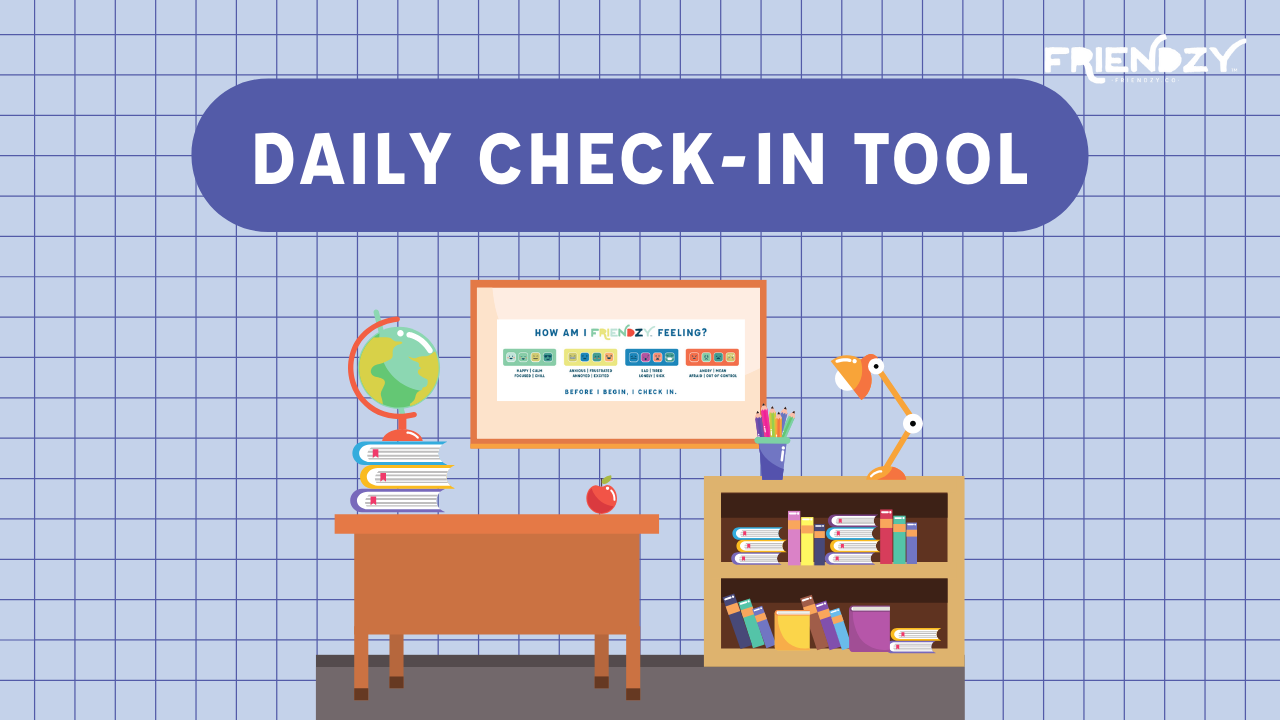
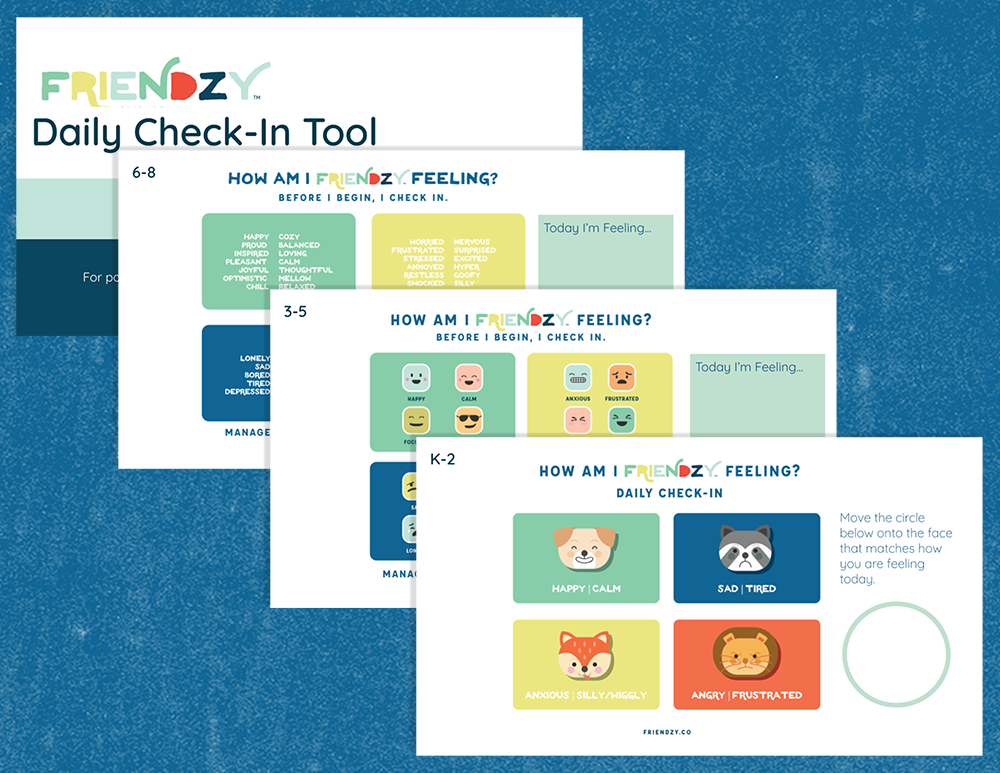
The Friendzy Daily Check-in Tool equips students with grade appropriate vocabulary and visual indicators designed to help students in identifying and naming their emotional state. The Friendzy Daily Check-in Tool is grade-banded and available to download in four convenient sizes:
An 8x11 Handout
A half-page desktop format
A multi-page classroom poster
A digital version slide deck
Click here to download all formats of the Daily Check-in Tool!
Use this brief daily exercise to make a big difference in your students’ overall wellbeing. When you talk about emotions every day, you are increasing every student’s emotional literacy and teaching them that emotions are temporary and can vary in intensity. This will lead to greater academic success and coping skills!
Remember, you may not “fix” the emotion, but you can acknowledge it! The Friendzy Daily Check-in Tool will allow you to acknowledge the emotions your students are experiencing and in doing so, will demonstrate care and concern for that student. As the teacher, you can model emotional expression and healthy coping skills! Students need to see adults in their lives identify and acknowledge their own emotions in a way that is healthy and productive. You can do it!
Watch this video to see how students use the Daily Check-in Tool during morning meetings. Reflect on the following questions on your own or with a buddy.

What did you notice about how students interacted with the Daily Check-in Tool?
How can the Daily Check-in Tool help build relationships in your classroom?
How do you envision the Daily Check-in Tool being implemented in your classroom?
Plan the Roll Out: Think about how you will roll out the Daily Check-in Tool. We recommend introducing it to the whole class during a time when students are emotionally regulated. This will help them use it more effectively when they are dysregulated, or feeling strong emotions. Give them time to practice interacting with the chart, naming emotions, and describing situations or experiences when they have felt those emotions. Reference the poster when sharing your own emotions and model for students the process of connecting a sensory experience to words. i.e. ”When my heart starts beating fast and my mouth starts feeling dry, it usually means I am feeling anxious about something.”
Make it Visible: Post the emotion chart of your choice around the classroom for all students to see. Utilize smaller sizes like the desk tag (we recommend laminating these), so students can have a personal version of the tool.
Start a Routine: Encourage students to interact with the emotion chart daily. Consider putting the poster-sized version on your classroom door and have students point to the word or image that best describes how they are feeling as they enter the classroom to start the day, after lunch, and during any other classroom transition times. Before transitioning to a new lesson or project, direct students to check-in with themselves on how they are feeling. Students can point to their emotion as you walk around the class, journal, or share with a classmate to practice naming emotions and having empathy for one another.
Support Reading Comprehension: Students of all ages can benefit from using the tool to support reading or literacy comprehension. Pair the emotion chart that your students use with reading or literacy comprehension discussions to support students in accurately describing character emotions and motivations.
Early Ed
Start a Daily Check-in arrival routine. Display a poster-sized version of the Animal Emotion Chart. Print photos of each students’ face and attach it to a magnet, piece of velcro, or clothespin. Each morning, students should move their face to the emotion they are feeling.
Ask students what each emotion looks and feels like. Clearly describe body language to help them identify emotions in themselves and others.
K-5
Use the Exit Tickets “My Emoji” or “End of Day Roadmap” to engage students in identifying their emotions at the start or end of the day.
Start a Daily Check-in arrival routine. Display a poster-sized version of the emotion chart of your choice. Write students’ names on clothespins and encourage students to move their clip to identify their emotion. This can be changed throughout the day, especially after big transitions (think lunch or recess).
Middle School
Use the Exit Tickets “My Emoji” or “End of Day Roadmap” to engage students in identifying their emotions at the start or end of the day.
Print and laminate a desk tag for each student. Encourage them to tape it into a notebook or folder they bring to all classrooms. This can help students utilize the tool throughout the school day.
High School
Use the Emotions Wheel to support students in their development and use of a wide range of vocabulary to describe their emotions.
Find the attached instruction sheet in the link below to find discussion questions and more context about the words we typically use to describe how we feel.
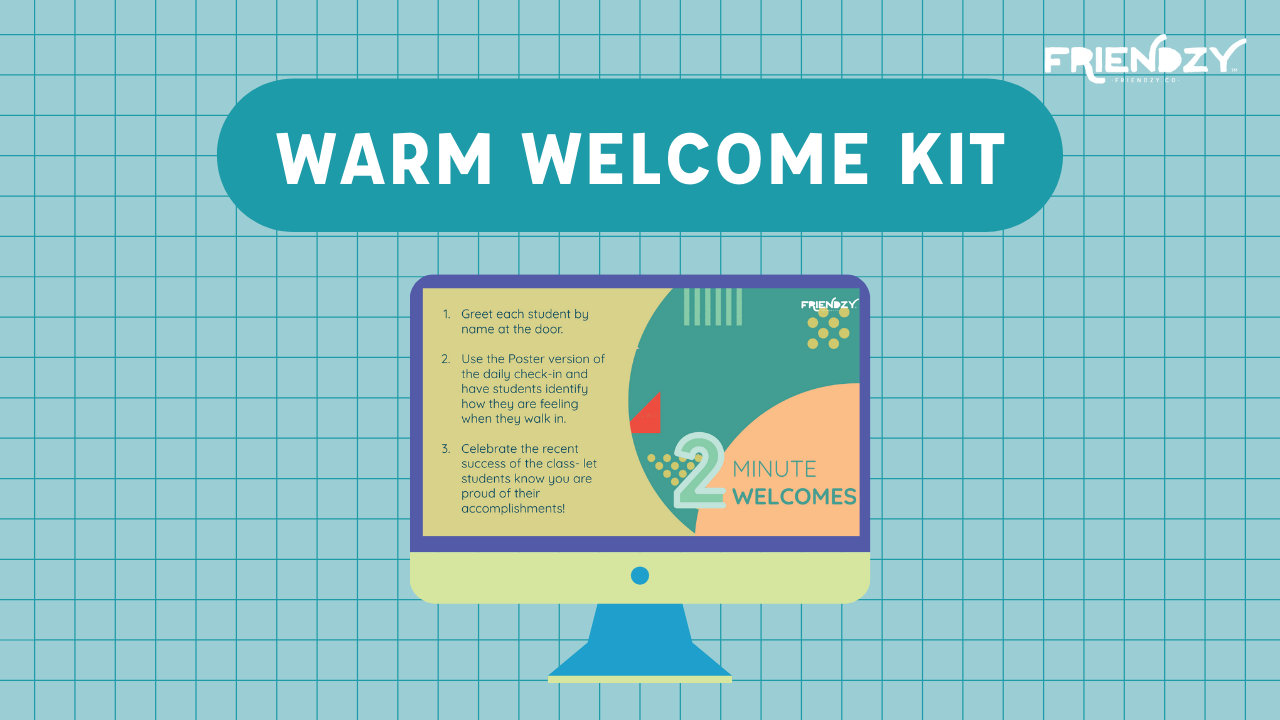
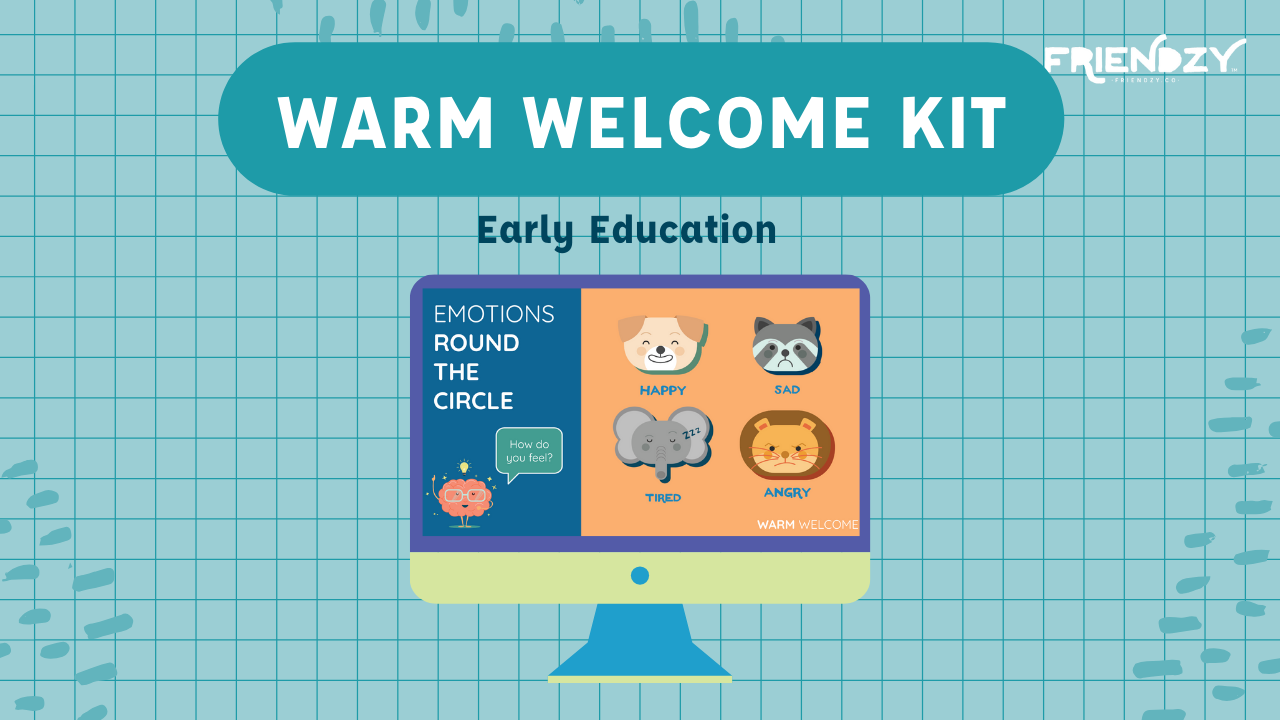
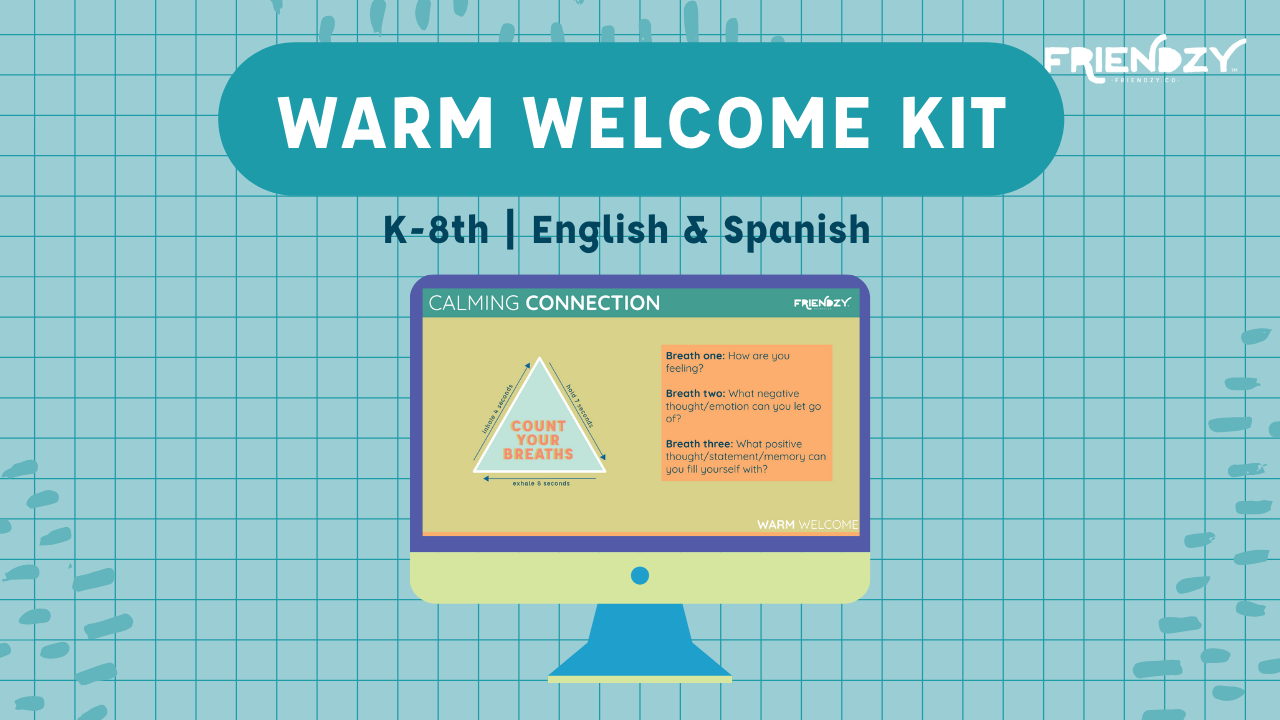
This Warm Welcome Kit includes several brief classroom connection activities designed to help you start every day, or class section, with intentional relational connection. The goal of starting each day with a warm welcome is to cultivate and maintain a safe learning environment that proactively strengthens peer to peer relationships so that all students feel safe, seen, heard and ready to learn.
Browse through this collection of Warm Welcomes and choose several that will work for your class. While doing so keep in mind the following:
TIME | Activities range from 2-15 minutes.
VULNERABILITY LEVEL | As your class gets to know each other, vulnerability will increase. At the beginning of the year (low vulnerability) consider allowing students to choose partners for sharing. As relationships are strengthened (high vulnerability), structure activities in a way that students are interacting with peers they may not know as well.
ENERGY LEVELS | Choose a calming activity when students are high energy or a more active warm welcome when students are feeling sluggish.
ROUTINE TO RITUAL | Choose (or create) one or two warm welcome activities that you engage in at least once weekly, (i.e. Monday Mindsets). Repetition creates an inclusive class ritual that further deepens peer to peer connection and belonging.
IMPLEMENTATION TIPS
Start Small: Choose one Warm Welcome activity that your students would enjoy. Observe how your students engage in the activity and adjust as needed.
Schedule It: Commit to a time each day or week when you can incorporate a Warm Welcome. A scheduled time will help you be more consistent, allow students to know what to expect, and give them something to look forward to.
Mix It Up: Use different Warm Welcome activities to keep students engaged. Try a calming activity when students need to slow down. Use an energizing activity in the afternoon slump. Take notice of which activities your students prefer.
Class Favorites: Write down your students' favorite Warm Welcome activities on popsicle sticks, put them in a jar, and let one student pick the activity for the day.
IMPLEMENTATION TIPS
Start Small: Choose one Warm Welcome activity that your students would enjoy. Observe how your students engage in the activity and adjust as needed.
Schedule It: Commit to a time each day or week when you can incorporate a Warm Welcome. A scheduled time will help you be more consistent, allow students to know what to expect, and give them something to look forward to.
Mix It Up: Use different Warm Welcome activities to keep students engaged. Try a calming activity when students need to slow down. Use an energizing activity in the afternoon slump. Take notice of which activities your students prefer.
Class Favorites: Write down your students' favorite Warm Welcome activities on popsicle sticks, put them in a jar, and let one student pick the activity for the day.
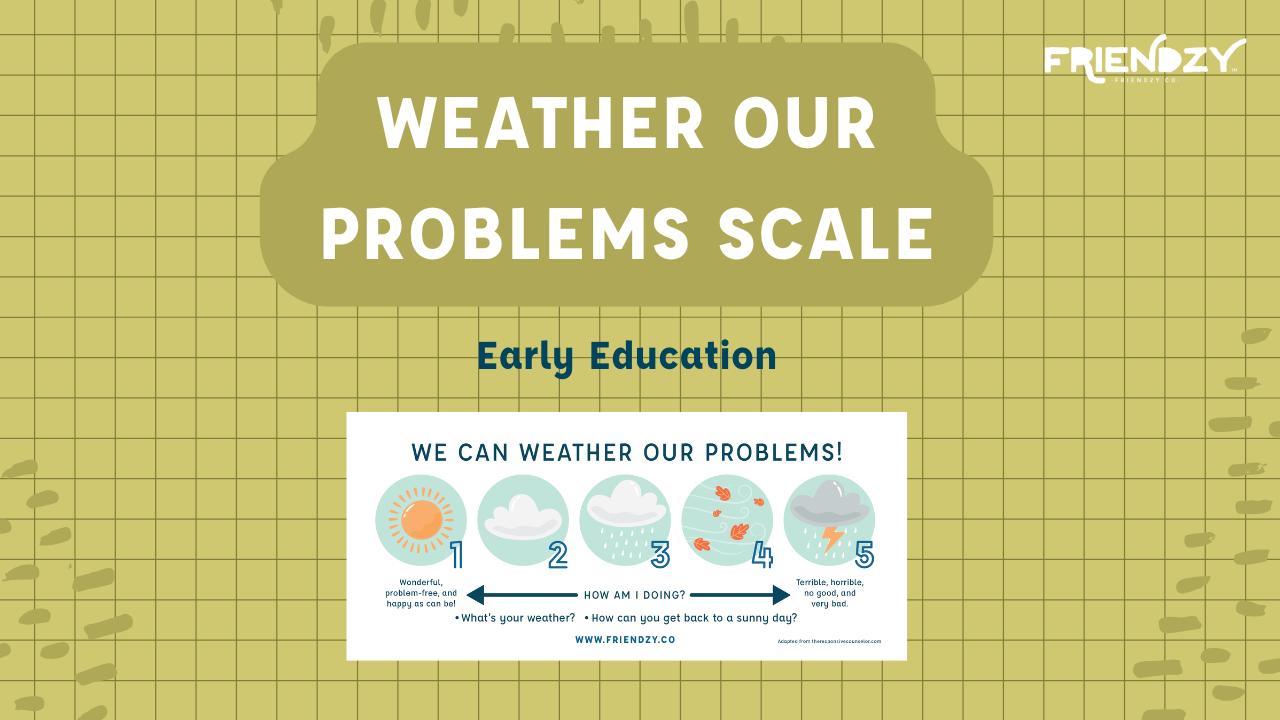
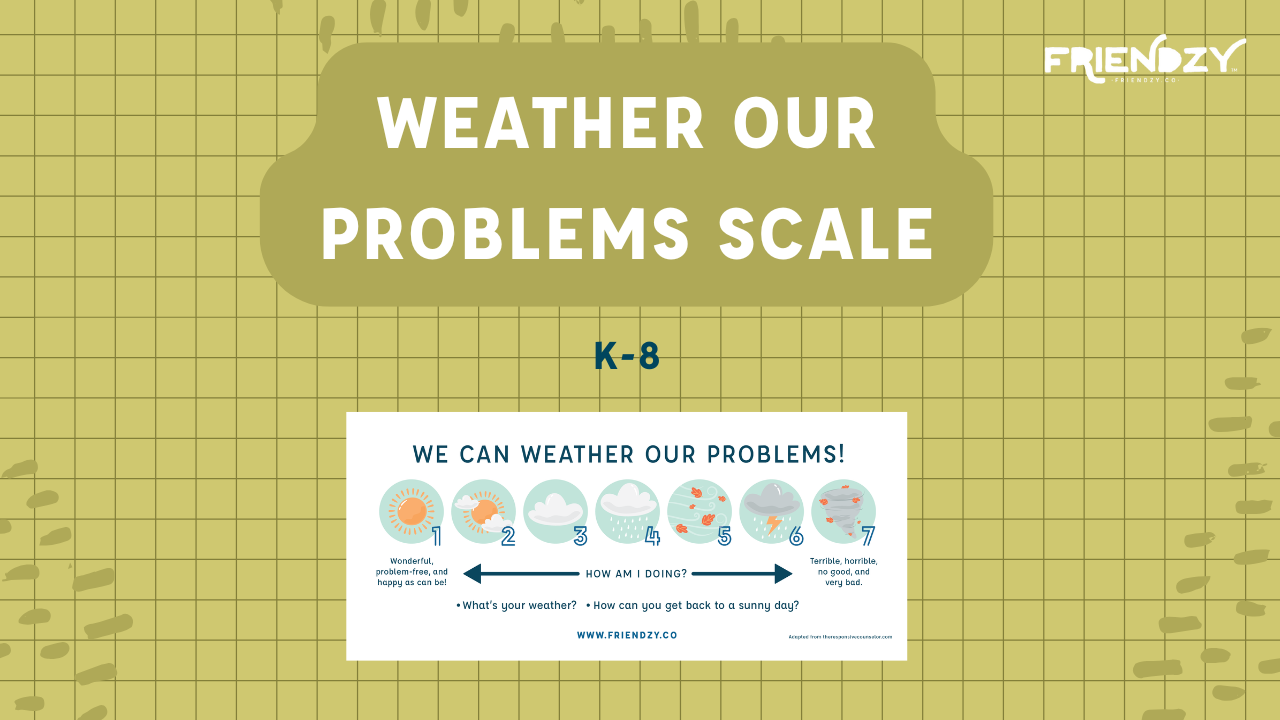
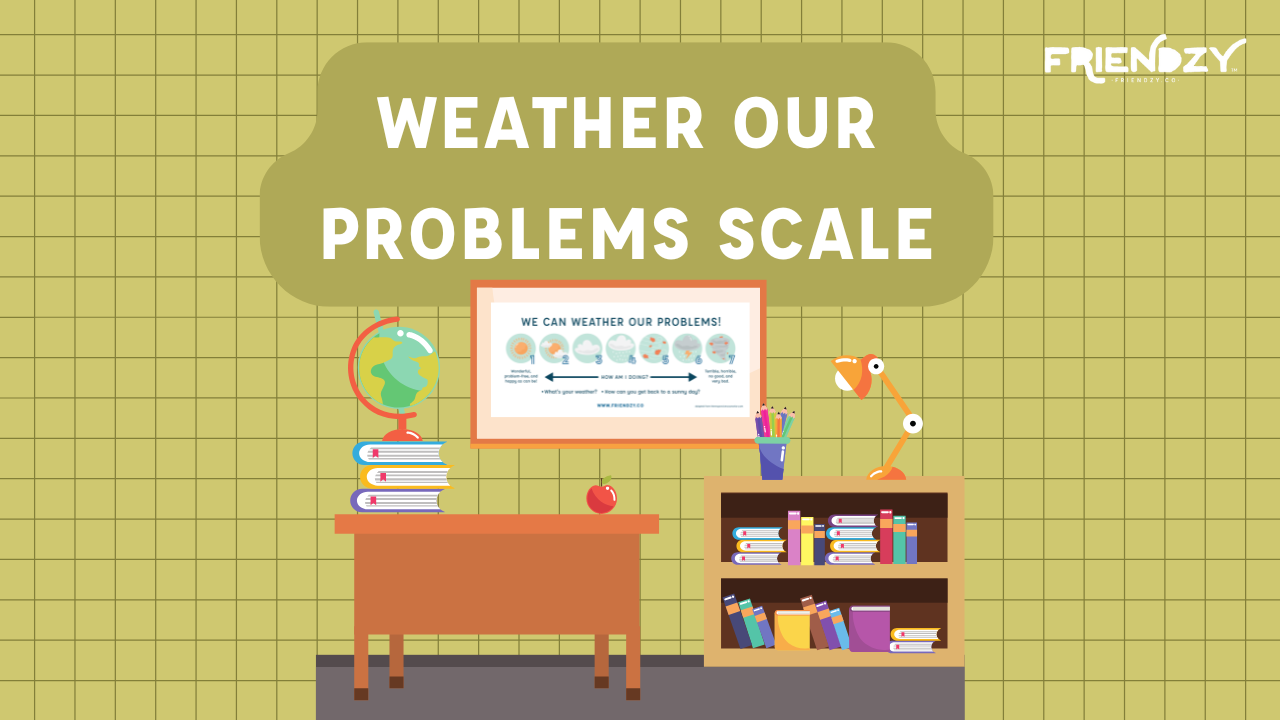 Friendzy's Weather Our Problems Scale is a solution-focused scaling strategy that invites students to rate how they are currently doing: how big is the problem or emotion?
Weather provides a great opportunity to visualize this scale. Thunderstorms, for example, are loud, stressful, and can be scary. At the same time, while we may have to work through hardship after it passes, we know the storm will pass and the sun will come out after. Thinking of emotions or problems like weather provides a sense of hope for us! Because we know weather changes, this mindset can help students feel “un-stuck!”. It can be helpful for us to take time to pause, acknowledge our emotions, and name the size of our problem before we can identify coping strategies or solutions that can help improve our situation.
If you are between a 1-2:
Yay! Things are going great! What is helping you be here?
What can you do more of to stay here?
What does being at this number tell you what you need?
If you are between a 3-5:
What would move you down a number or two? Is there a coping skill that would help?
When things are going better, what will you notice is different?
What does being at this number tell you that you need?
Plan the Rollout: We recommend introducing it to the whole class during a time when students are emotionally regulated. This will help them use it more effectively when they are dysregulated, or feeling strong emotions.
Introduce the Scale: Facilitate a conversation with students about weather. Ask them to imagine the most extreme weather and next, the most pleasant weather. Discuss the weather in between. Display the Weather Our Problems Scale and share that we cannot control the weather, but we can control our response (ie. we can grab an umbrella on those rainy days to feel more prepared)! When we experience thunderstorms or stormy moments, we can pause and think about what might help improve our situation. What might bring us back towards a sunny day? Maybe a coping strategy like taking a break, talking to a trusted adult, squeezing a fidget, using a deep breathing strategy, etc. Remembering that controlling our response can help us find a piece of control in tough moments. We can weather our problems!
Make it Visible: Post the Weather Our Problems Scale in your classroom to make it visible for students. You can print out smaller versions to give to students for more personalized use. They can use paper clips to slide up and down throughout the day as they check in with themselves. Keep a Daily-Check In Tool nearby if students need help naming emotions.
Start a Routine: Encourage students to interact with the tool as they need it. Remind students to use the Daily Check-in Tool alongside the weather chart if they need access to emotion vocabulary.
If you are between a 1-3:
Yay! Things are going great! What is helping you be here?
What can you do more of to stay here?
What does being at this number tell you what you need?
If you are between a 4-7:
What would move you down a number or two? Is there a coping skill that would help?
When things are going better, what will you notice is different?
What does being at this number tell you that you need?
Plan the Rollout: We recommend introducing it to the whole class during a time when students are emotionally regulated. This will help them use it more effectively when they are dysregulated, or feeling strong emotions.
Introduce the Scale: Facilitate a conversation with students about weather. Ask them to imagine the most extreme weather and next, the most pleasant weather. Discuss the weather in between. Display the Weather Our Problems Scale and share that we cannot control the weather, but we can control our response (ie. we can grab an umbrella on those rainy days to feel more prepared)! When we experience tornadoes or stormy moments, we can pause and think about what might help improve our situation. What might bring us back towards a sunny day? Maybe a coping strategy like taking a break, talking to a trusted adult, squeezing a fidget, using a deep breathing strategy, etc. Remembering that controlling our response can help us find a piece of control in tough moments. We can weather our problems!
Make it Visible: Post the Weather Our Problems Scale in your classroom to make it visible for students. You can print out smaller versions to give to students for more personalized use. They can use paper clips to slide up and down throughout the day as they check in with themselves. Keep a Daily-Check In Tool nearby if students need help naming emotions.
Start a Routine: Encourage students to interact with the tool as they need it. Remind students to use the Daily Check-in Tool alongside the weather chart if they need access to emotion vocabulary.
As K-5 students begin to use this tool, check in with them afterwards. You can use these questions as a conversation guide for you. Feel free to remind them of coping skills if they are struggling to think of ones that might help. Deep breathing is always a great place to start!
Middle School students might enjoy processing these questions internally. You can print out the tool instructions on the Friendzy Online Resource Portal to have available for students. You can also leave notecards nearby in case students want to write a message down to share with you. Always encourage them to come to you to check in as they need, but check in from time to time anyway!
We may not be able to control all that comes our way in this life, but we can weather our problems!

The Emotions Wheel is a tool to help students learn to identify the emotions that they are experiencing at any given moment. Once students can identify how they feel, they can respond to, resolve, and manage emotions.
With increased emotional vocabulary comes more honesty, specificity, and creativity in the sharing of our emotions. This enables us to develop closer relationships and to be more vulnerable with one another, which, in turn, can allow us to be more supportive of one another. It also helps us to grow in our own self-awareness.
The Feelings Wheel was developed by Dr. Gloria Willcox in 1982. In her work as a psychotherapist, she noticed that many of her clients lacked the emotional vocabulary to accurately express how they were feeling. Pulling inspiration from other great works, such as Joseph Zinker’s ideas of the therapist as an artist and ideas of Robert Plutchick, a professor of psychology from New York, of describing feelings by color, she sought to create a tool that would encourage increased emotional literacy for individuals.
Dr. Willcox’s Feelings Wheel begins with six basic emotions: mad, sad, scared, joyful, powerful, and peaceful. Radiating out from these six emotions are a variety of secondary and tertiary emotions. For example, let’s pretend I feel sad. I can begin by acknowledging I feel sad in the center of the wheel. From there, I can use the wheel to further understand the kind of sadness I am feeling (ie. lonely, or even further, inadequate). How I respond and manage feeling lonely might look different than if I was feeling ashamed or bashful, which also stems from the basic emotion of sadness. It’s important to recognize that we might even be feeling more than one emotion at once. That’s okay and normal! This tool can be very helpful in allowing us to dig deeper into the root of our feelings, which can allow us to respond, react, and manage our emotions in even better ways.
Play the 30 Circles Challenge. Students will be tasked with independently identifying 30 different emotions in word or emoji form. Have a discussion about the emotions they came up with and pay attention to any trends you notice.
Unpack the Emotions Wheel. Ask students what they notice about the three rings of the wheel and how it is structured.
How do the colors represent emotions?
How do the rings build off one another?
How would using this wheel help you identify your emotions more specifically?
Which words do you tend to use most often? Could you get more accurate?
Give students a voice. Use the following questions to gauge how students want to use the Daily Check-in Tool throughout the year.
In what ways would you like to check in with each other this year? How could the Emotions Wheel help in this process?
How can we be supportive classmates as our peers share? How can we create an environment where students feel welcome to share?
Be consistent. Post the Emotions Wheel on a slide or in your classroom each day. Ask students to identify how they are feeling, using more than one word if necessary. Encourage students to use words in the middle or outer ring to get specific about how they feel.
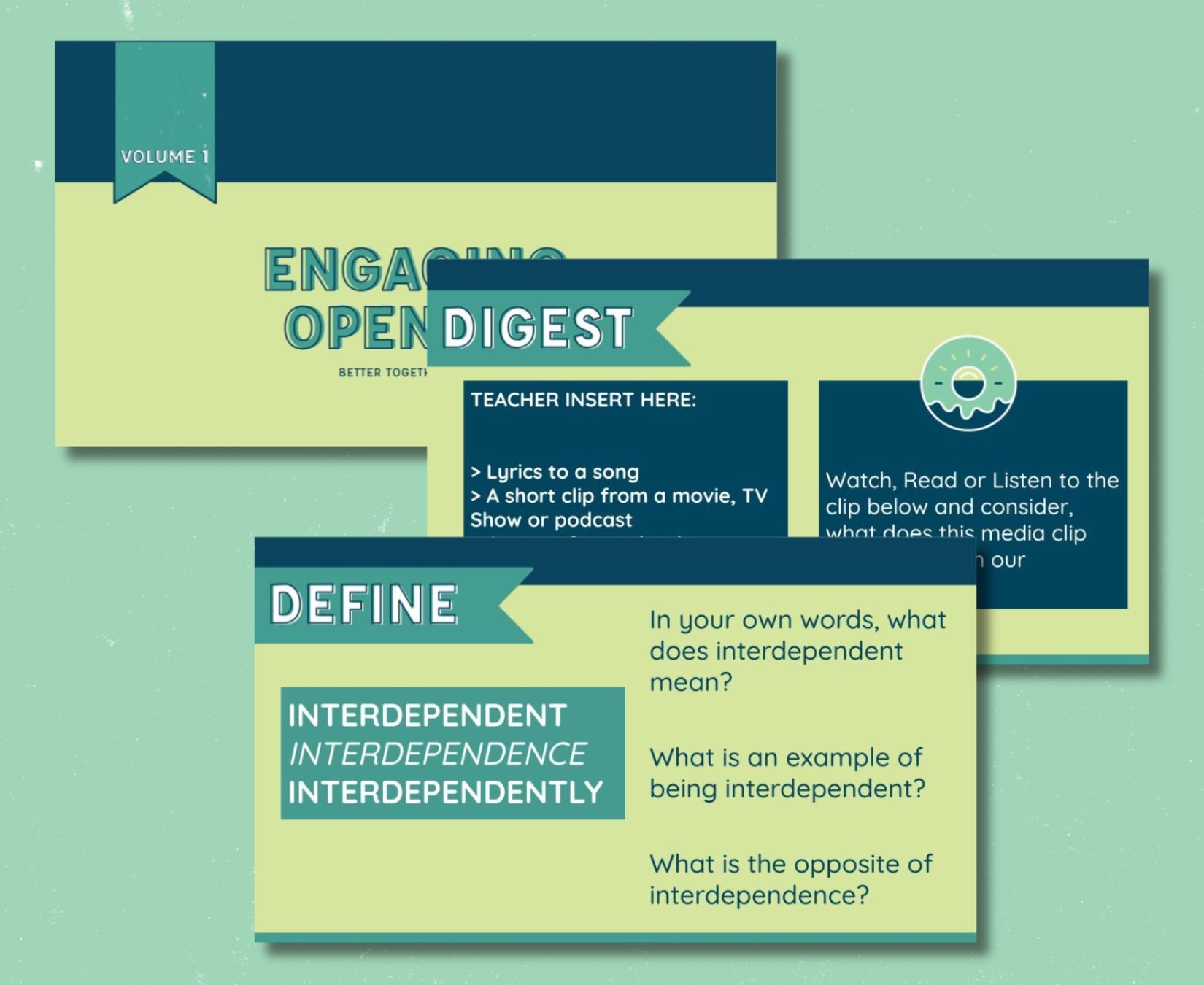
This Engaging Opener Slide Deck includes several brief classroom connection activities designed to help you start every day, or class section, with intentional relational connection. The goal of starting each day with an Engaging Opener is to cultivate and maintain a safe learning environment that proactively strengthens peer to peer relationships so that all students feel safe, seen, heard and ready to learn.
Browse through this deck of Engaging Openers and choose several that will work for your class. While doing so keep in mind the following:
TIME | Activities range from 2-15 minutes.
VULNERABILITY LEVEL | As your class gets to know each other, vulnerability will increase. At the beginning of the year (low vulnerability) consider allowing students to choose partners for sharing. As relationships are strengthened (high vulnerability), structure activities in a way that students are interacting with peers they may not know as well.
ROUTINE TO RITUAL | Choose (or create) one or two Engaging Openers at least once weekly, (i.e. Monday Mindsets). Repetition creates an inclusive class ritual that further deepens peer to peer connection and belonging.
IMPLEMENTATION TIPS
Start Small: Choose one Engaging Opener that your students would enjoy. Observe how your students engage and adjust as needed.
Schedule It: Commit to a time each day or week when you can incorporate an Engaging Opener. A scheduled time will help you be more consistent, allow students to know what to expect, and give them something to look forward to.
Mix It Up: Use different Engaging Openers to keep students engaged. Take notice of which activities your students prefer.
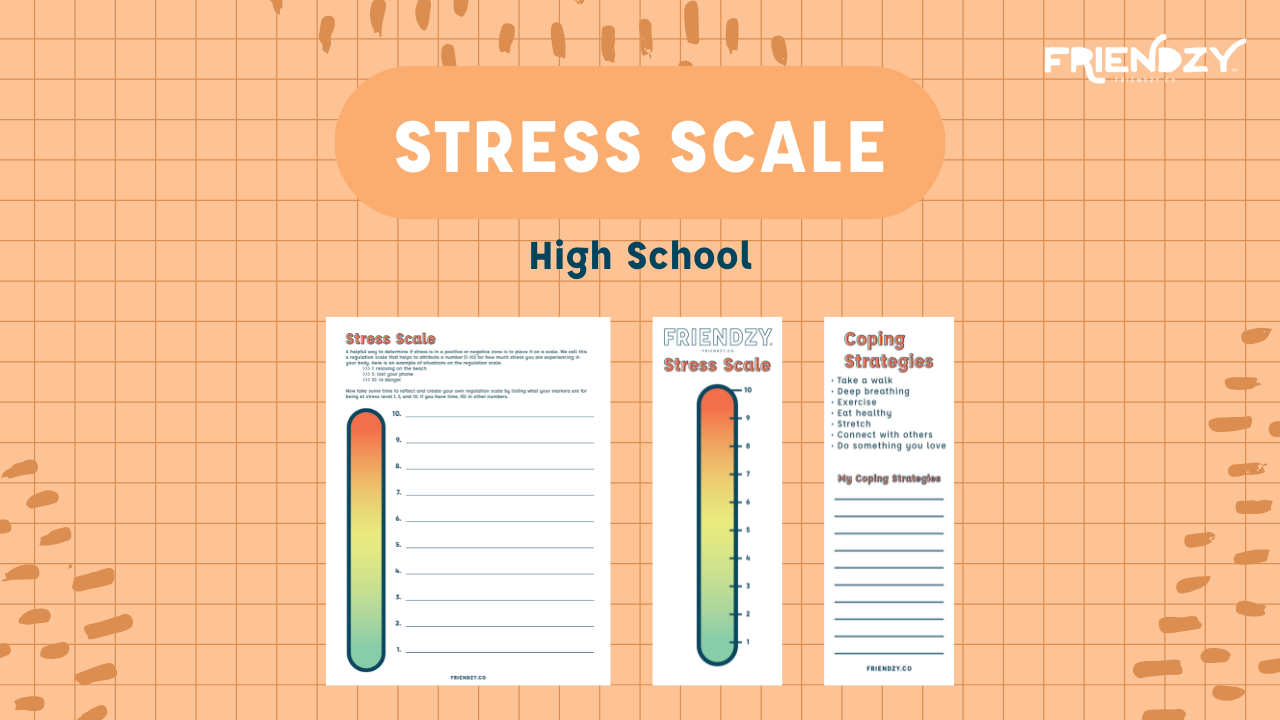
Stress is a common emotion and experience for high school students. Utilizing the Friendzy Stress Scale is a helpful, solution-focused way for students to recognize their level of stress and identify solutions to improve their situation.
Stress is a common emotion and experience for high school students. Utilizing the Friendzy Stress Scale is a helpful, solution-focused way for students to recognize their level of stress and identify solutions to improve their situation.
This scale invites students to rate how stressed they are on a scale from 1 to 10. This is an easy tool that helps students to grow in self-awareness and self-regulation, be their own problem solvers, and realize that stress and emotions come and go. Students have the power to manage their stress!
A helpful way to determine if stress is positive or negative is to place it on a scale. We call this a regulation scale that helps to attribute a number (1-10) for how much stress you are experiencing in your body. Here is an example of situations on the regulation scale.
1: relaxing on the beach
5: lost your phone
10: in danger
Those are examples of growing stress levels. When stress in your body rises above a 5, you are in the caution zone (yellow) moving towards flipping your lid (red).When you start to feel stress that is above a 5, that is moving into negative stress that can have harmful and lasting effects.
Distribute the Stress Scale Worksheet and instruct students to create their own regulation scale by listing their markers for being at a stress level 1, 5, and 10. They can fill in the rest of the scale with situations that bring positive or negative stress throughout the scale.

 Google slide deck
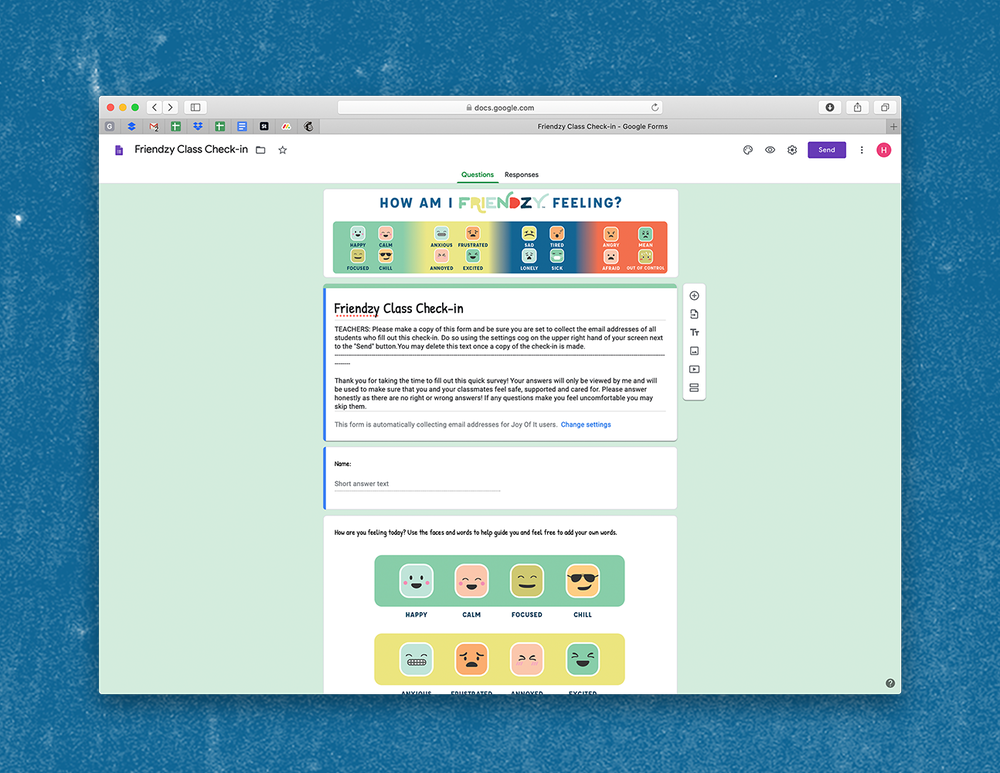 Google form