Discover a collection of classroom-ready tools and activities designed to help Catholic educators build belonging in the classroom and beyond.
Belonging isn’t a program. It’s a posture.
It’s the quiet power that transforms classrooms from places students attend into places they want to be. In a world that often feels fragmented and fast, we help educators intentionally build cultures where every student feels seen, known, and valued.
Because when students belong, they grow.
Students don’t thrive on curriculum alone, they thrive on connection. Research confirms what we already feel in our bones: when students experience belonging, engagement rises, resilience strengthens, and learning deepens.
But belonging doesn’t happen by accident. It must be modeled, practiced, and nurtured.
Throughout the Gospels, Jesus continually created spaces of welcome. He noticed the overlooked, sat with the outsiders and spoke dignity into the marginalized. Belonging was not an afterthought in His ministry. It was the method.
When we follow His example in our classrooms, we reflect a Kingdom culture where every person has value.
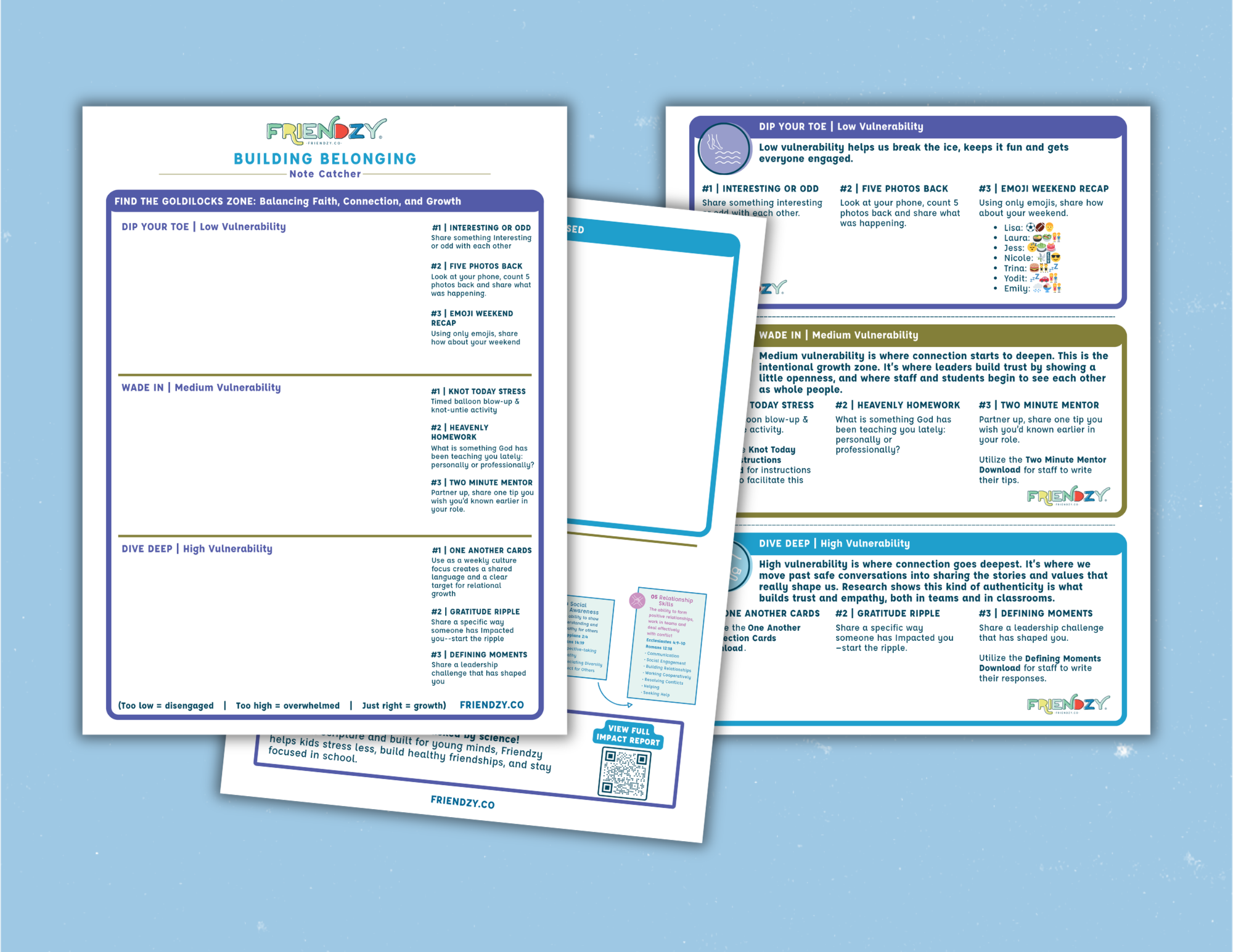
Note Catcher
Connection Ideas Guide
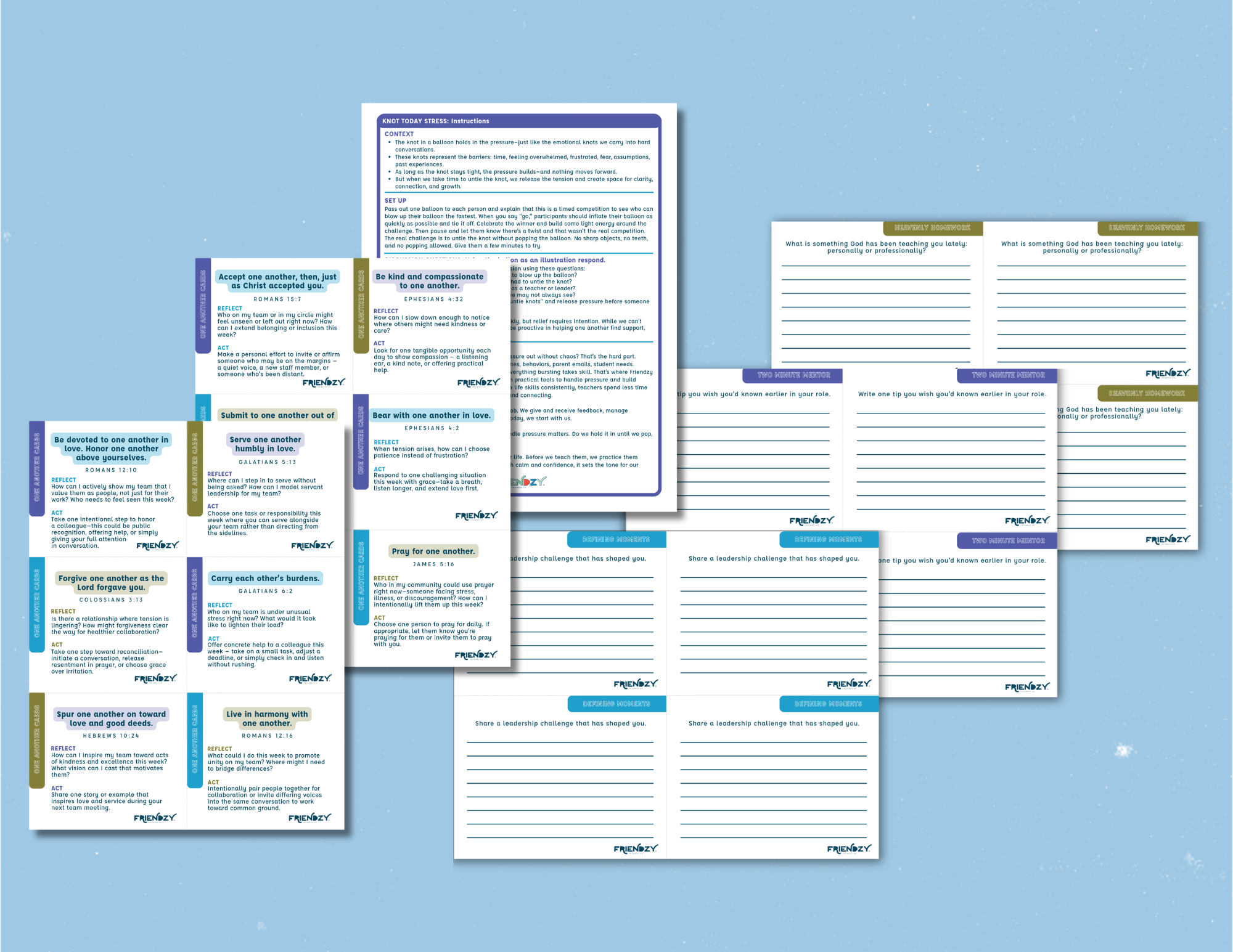
Knot Today Stress Activity
Heavenly Homework
Two Minute Mentor Response Card
One Another Connection Cards
Defining Moments Response Card
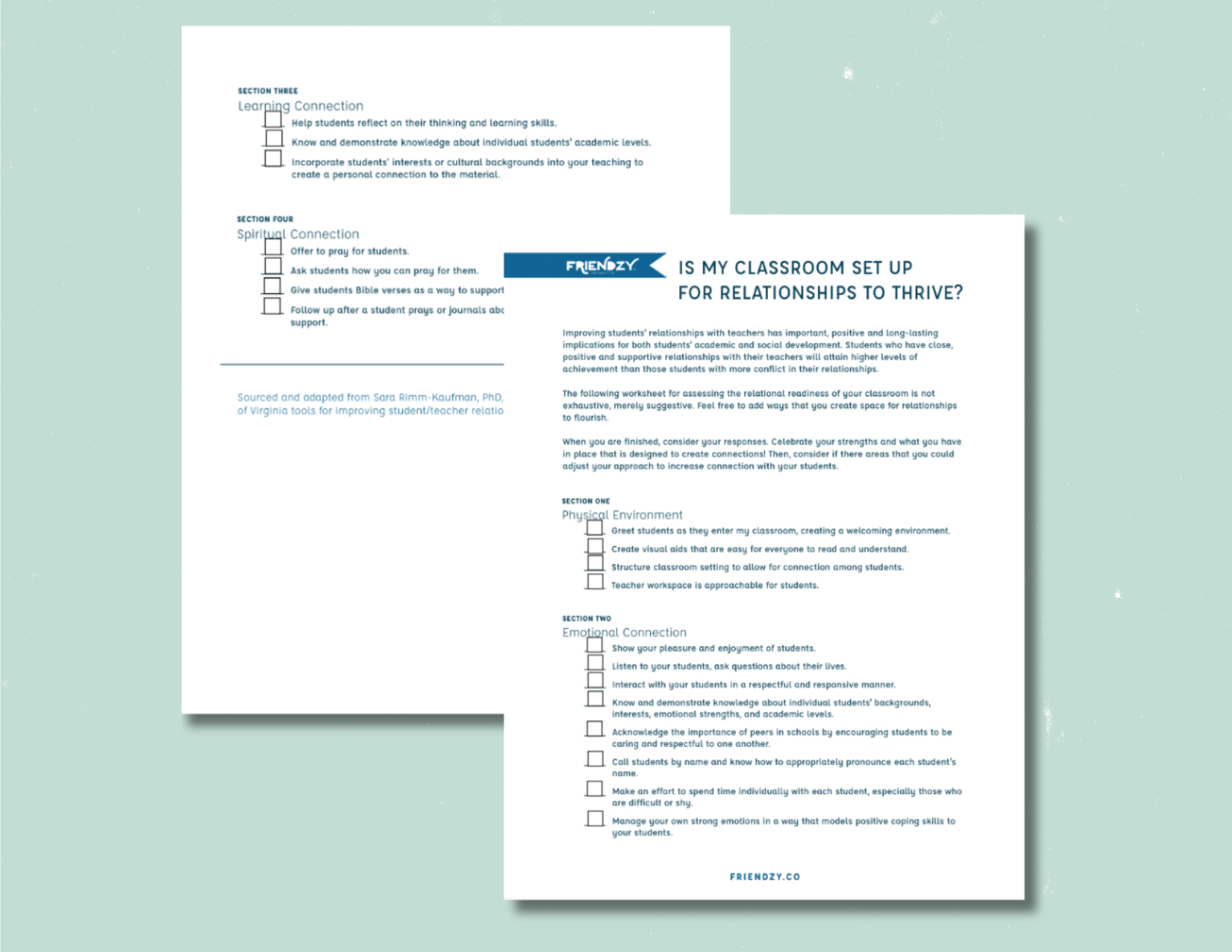
This worksheet helps educators asses relational readiness in the classroom. We've added a lot to think through, but we welcome you to add additional findings you uncover the list as well! Once finished, celebrate the strengths and what's already in place in the classroom to foster connection. Then, use it to identify gaps where more connections can be made in a positive way!
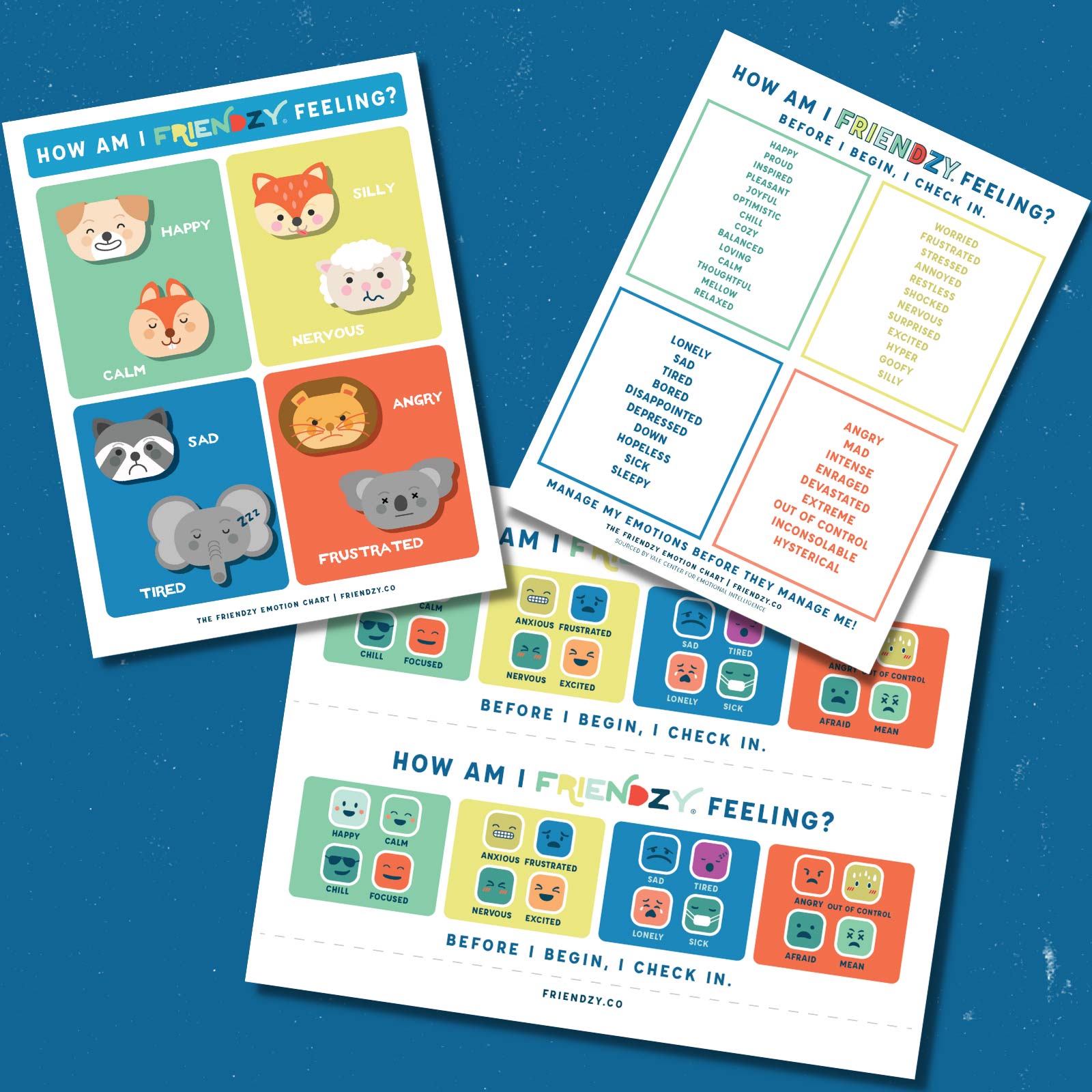
Model emotional expression and healthy coping skills! Students need to see adults in their lives identify and acknowledge their own emotions in a way that is healthy and productive. Teachers, you have the capacity to lead and model to your students positive emotional expression and management. You can do it!
‘Ohana: Stick Together | A unit to help students foster a strong sense of community and collaboration, emphasizing the values of 'Ohana (family) and acceptance. This creates a positive learning environment where students develop relationship skills and responsible decision-making.
Teaching Part 1: Unit Overview | An overview lesson that introduces the catchphrase, key verse, and goal of the unit. It also features relevant definitions and real-world examples.
Teaching Part 2: Object Lesson | A structured object lesson that provides a complete conversation to teach from, including a visual illustration.
Read-Aloud + Group Questions | A read-aloud lesson featuring an age appropriate story connected to the Catchphrase and Key Verse.
Activity | An activity that highlights fine motor skills. Students will create something that reinforces the main idea of the unit.
Game | A game that highlights gross motor skills and reinforces the main Idea of the unit.
Even More | This lesson features an additional passage. Using active engagement techniques, students will connect a new bible story to the theme of the unit.
Tips for getting started:
Read through the units
Decide which would most benefit your students
Find a consistent time in your schedule to teach Friendzy each week for one month
Select the lessons you will teach and gather supplies
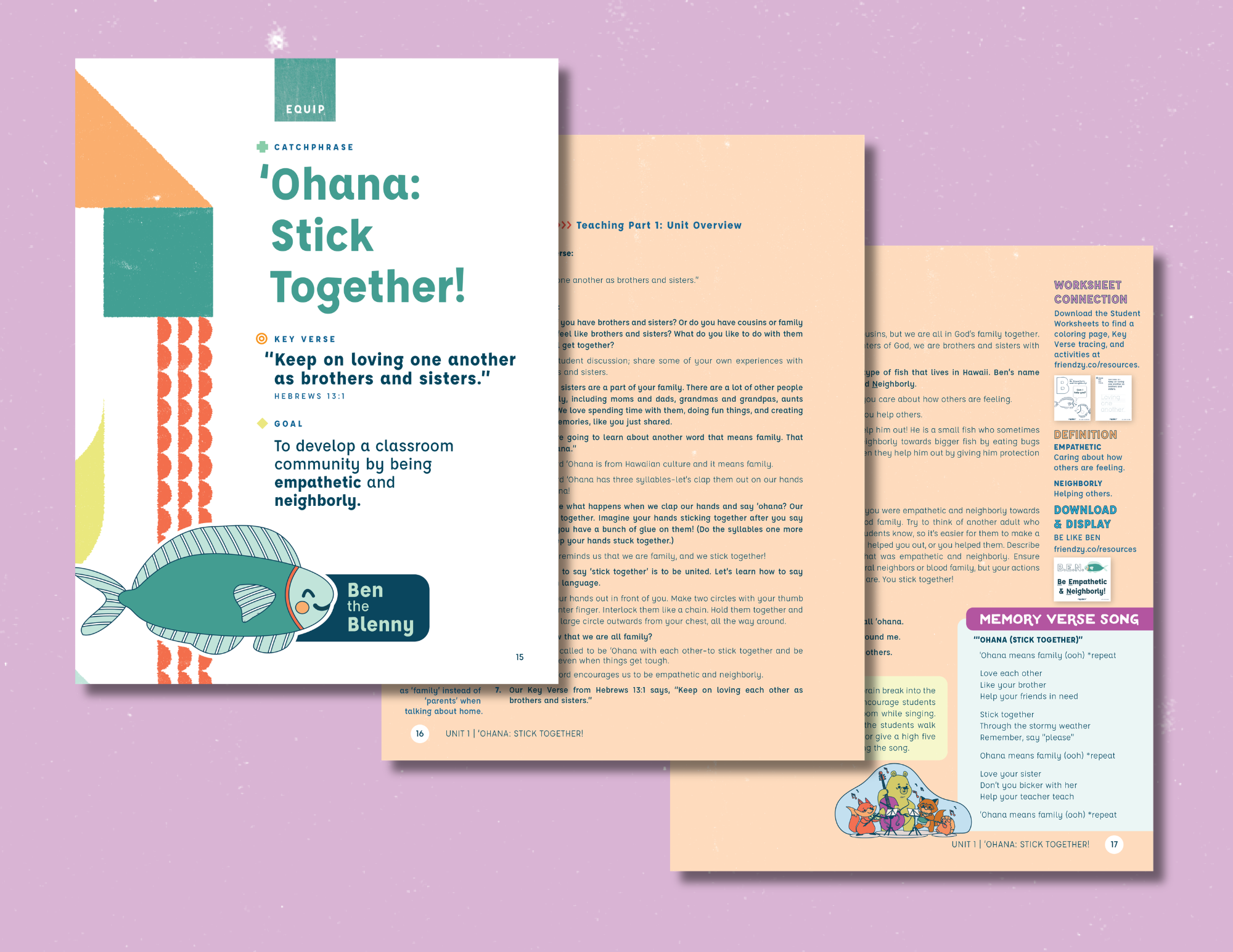
Use as a weekly culture focus creates a shared language and a clear target for relational growth. Each card includes a reflection prompt and action students can put into practice.
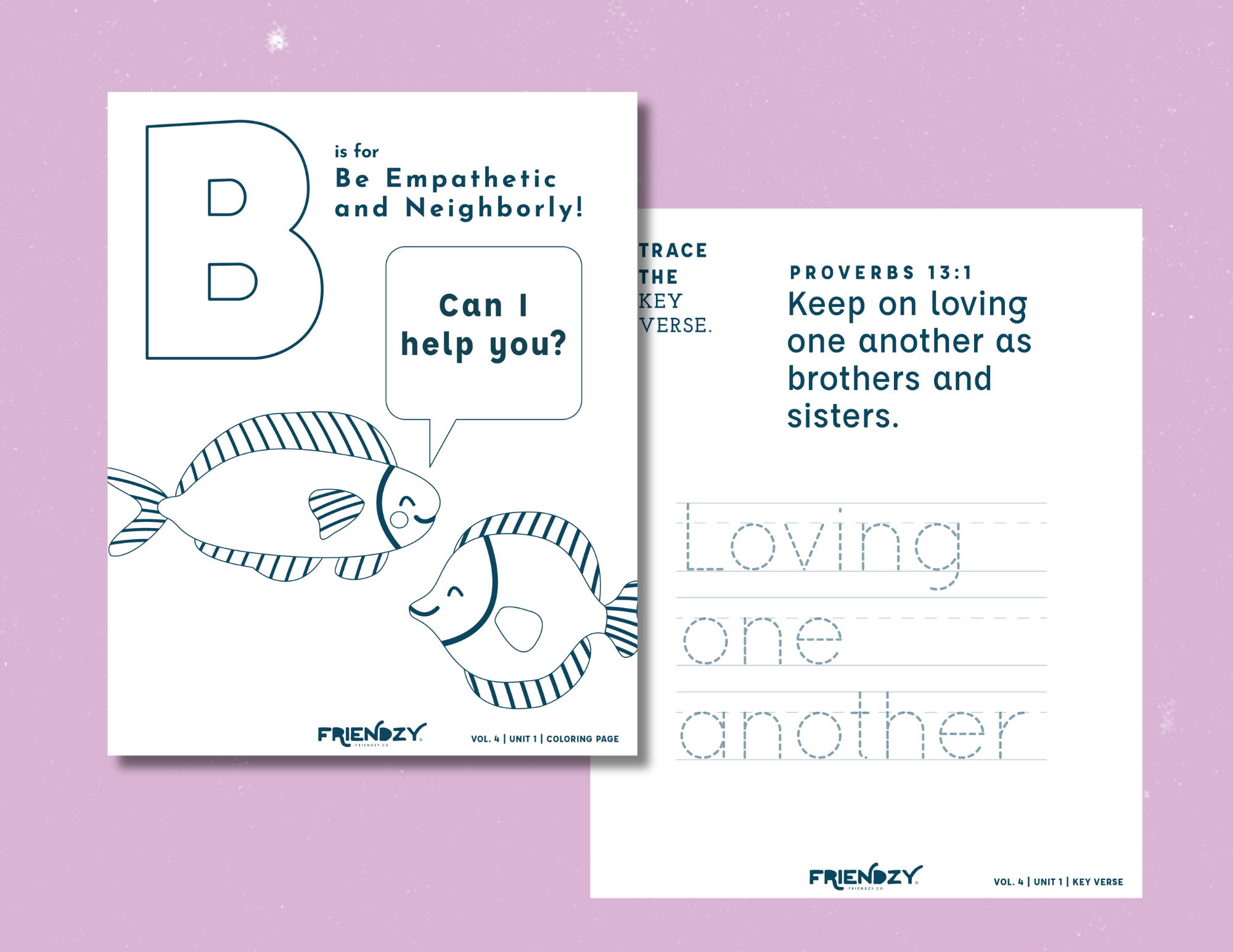
Worksheets can be used during transition or quiet times. Students can color and/or write using crayons, colored pencils, or markers.