Download your Friendzy freebies for Valentine's Day classroom celebrations!
Written by: Laura Reyes | Lead Project Manager
Every February, back when I was a classroom teacher, I’d tell myself that I’m going to be that teacher, the one who plans ahead for Valentine’s Day and doesn’t panic-buy cards with a small party favor tucked inside the night before. And every February… well, let’s just say Target knows me well.
But one Valentine’s Day, something unexpected happened. A student walked up to me with a homemade card and a small bag of my favorite snack, Hot Cheeto Puffs. Clearly, this student knew the way to my heart. Inside the card, it read: “You’re the best teacher ever. You always notice when I try, even when I don’t get it right.”
Cue the full stop and the lump in my throat
Out of all the things this student could have remembered (Kahoot or Stinky Feet Review games, eating turkish delights when reading The Chronicles of Narnia, having the entire 5th grade class dress up as 101 Dalmatians for “100 Days of School”), it was that I noticed his effort. Not perfection, not the right answer. Just trying.
That moment stayed with me long after I left the classroom because it reflects something research confirms again and again: the feedback students hear from trusted adults becomes their inner voice.
Positive feedback matters, but specific, strengths-based feedback matters more. Research shows that when children regularly hear strengths named (like perseverance, problem-solving, kindness, or courage), they are more engaged, more motivated, and more willing to stick with challenges, not because they’re “naturally good” at something, but because they learn that effort and strategies lead to growth (Waters, Loton, & Jach, 2019).
This is especially important in today’s world, where students are surrounded by loud, external messages that measure worth through grades, likes, or comparison. When caring adults consistently name strengths, they help shape a child’s inner voice - one that says, I can try again, I belong here, and I’m capable of growing. That steady, affirming language builds confidence and fuels perseverance long after the moment has passed.
That’s why the activities below are intentionally designed to go beyond simple Valentine’s Day fun. Each one helps students practice identifying, naming, and celebrating strengths in real time!
Goal: Students will practice noticing and naming kind actions while connecting them to strengths like kindness, helpfulness, and sharing.
Introduce the Paper Hearts: Use paper hearts to represent a kind act.
Spot It: Throughout the day, pause during transitions, snack time, or circle time. Invite students to be “Sweet Spotters” and point out a kind action they noticed:
“I saw ___ share the blocks.”
“___ helped clean up the table.”
“___ gave a hug to a friend who was sad.”
Say It Together: As a group, name the action you observed aloud (helping, sharing, kindness). Write the strength on the candy heart and place it on a Kindness Wall.

Goal: Students will practice giving specific, strengths-based feedback to their peers.
Strengths Finder: Before starting, introduce Friendzy’s Strengths Finder that lists common strengths. Review a few together, so students have shared language to pull from during the activity.
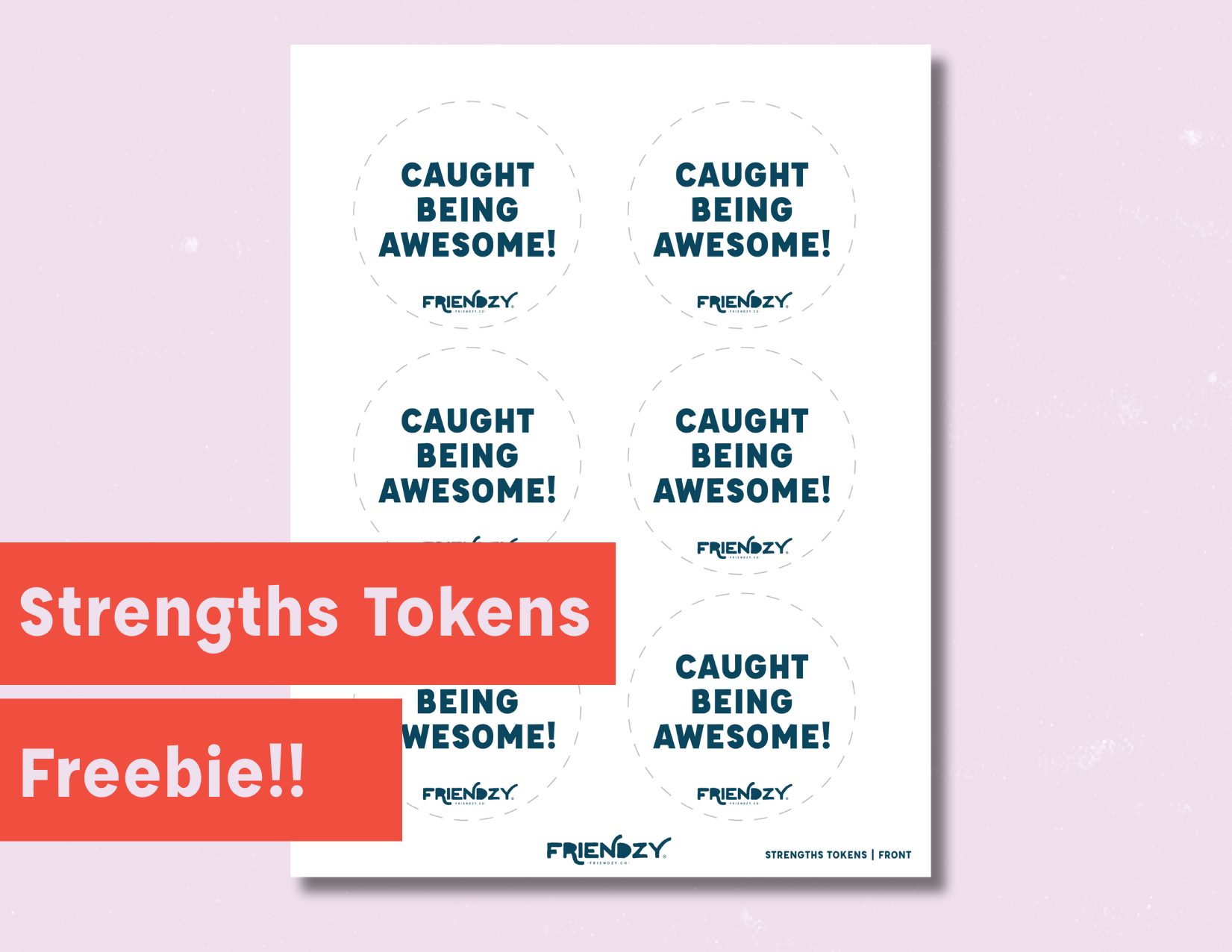
Notice and Name Strengths: Give each student 3 small paper tokens. Invite students to write about a strength or kind action they noticed a classmate demonstrating (examples include helping, trying again, listening, including others, or showing courage).
Share and Display: Students can give the token directly to their classmate and take a moment to celebrate the kind action together.
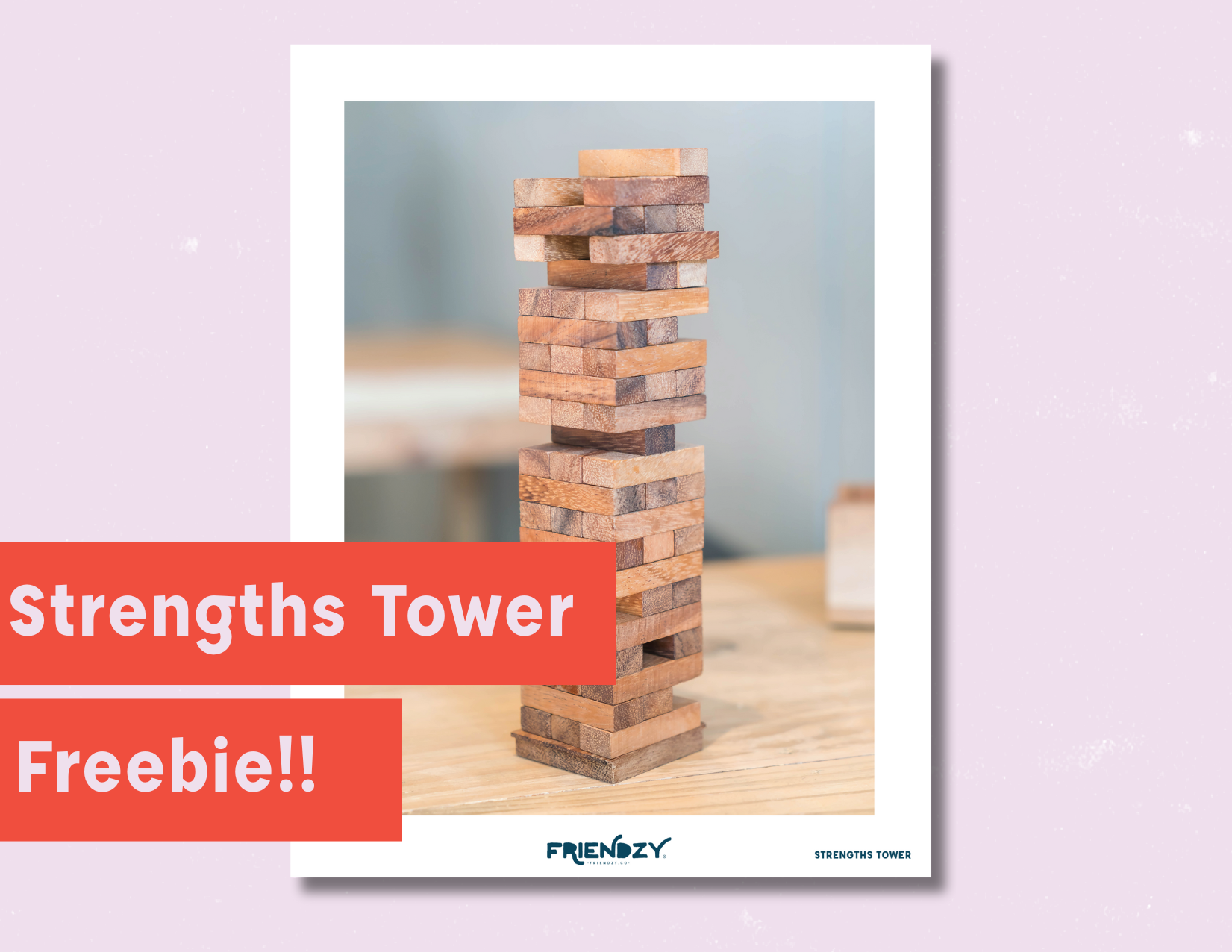
Goal: Students will notice, name, and celebrate strengths in peers while engaging in a hands-on game
Prepare the Blocks: Write a strength, value, or act of kindness on each block (use Friendzy’s Strengths Finder as a reference). Examples include:
Perseverance
Teamwork
Empathy
Creativity
Courage
Helping
Listening
Set Up the Blocks: Stack the blocks in alternating layers (3 blocks per layer, then rotate the next layer) - creating a freestanding tower
Play Strengths Tower: Students will each take a turn pulling a block from the tower. When they pull a block, they will read the strength aloud and either:
Share a personal example of when they demonstrated that strength, or
Name a peer who showed that strength recently and explain how
Reflection: After the tower falls, engage in a group discussion:
Which strengths came up most?
How did it feel to be recognized or to recognize someone else?
How can we notice and celebrate these strengths every day?
Goal: Students will demonstrate and reflect on strengths in real-world situations
Set the Scene: Divide your class into small groups of 3-5 to create a 2-minute skit. Instruct students that each skit should show a strength in action (such as perseverance, empathy, courage, teamwork, or leadership)
Plan & Rehearse: Groups plan their skit, deciding who will play which role and how they will demonstrate the strengths clearly
Perform and Notice: Have each group perform their skits for the class. After each skit, engage in a group discussion:
Which strength did you notice in this skit, and how was it demonstrated?
How might small, intentional acts of kindness or strength create a ripple effect in our school and community?
What’s one action that you can take this week to demonstrate a strength you admire in someone else?
Just like that bag of Hot Cheeto Puffs and handmade card reminded me years ago, it’s the small moments of noticing and celebrating strengths that stick with students. Whether it’s a student taking turns, building a tower with teamwork, or stepping up with courage, each act matters.
Take a moment this Valentine’s Day (or any day) to spot it, name it, and celebrate it. You might be surprised at how far a kind word or a little recognition can travel from heart to heart.