Download your Friendzy freebies that provide turnkey lessons for your classroom to celebrate Thanksgiving.
Celebrate the Season of Thankfulness with Turnkey Friendzy Lessons
Fall is known as harvest season, a time to gather the crops that have been growing all year. At Friendzy, we want to help our students gather information about their emotions to help them better understand themselves and what they need. This season, let’s practice harvesting our emotions. Gathering information about how we feel can help us better understand our emotions and how to manage them.
Help your students develop and practice self-awareness skills with these easy-to-implement activities and lessons.
Early Ed: Harvest Our Emotions Basket
Start the day by focusing on one commandment and inviting students to reflect on how it relates to their relationships with God and others.
Young children identify basic emotions and name how they feel
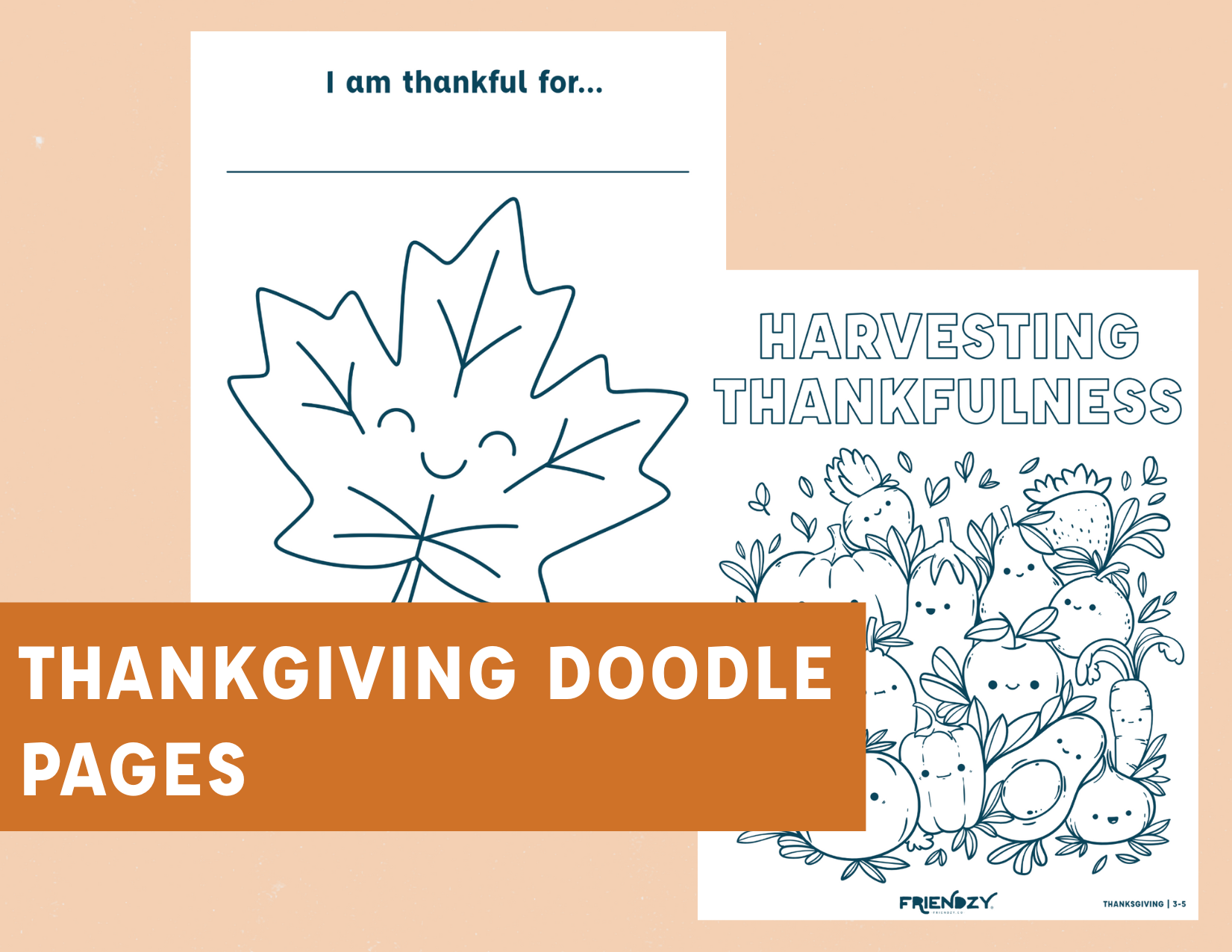
Introduce the Friendzy Daily Check-in Tool (Animal Version)
Encourage students to identify the emotions on the chart by asking, “How are the animals feeling?”
Complete the activity “Harvesting Our Emotions” by giving each student a fall fruit or vegetable cutout. Instruct them to draw how they feel on the cutout.
Place each fruit or vegetable on a poster with a large basket to represent harvesting or gathering our emotions. Encourage students to name the emotions they feel with the sentence stem, “I feel ____.”
When we practice naming how we feel, we can better understand ourselves and what we need.
K-5: Harvest Our Emotions Tree
Students identify emotions, name how they feel, and describe coping strategies
Introduce the Friendzy Daily Check-in Tool (Animal or Emoji Version)
Encourage students to identify the emotions on the chart
Complete the activity “Harvesting Our Emotions” by giving each student a fall fruit or leaf cutout. Instruct them to draw or write about how they feel on the cutout.
Place each fruit or leaf on a poster with a large tree to represent harvesting or gathering our emotions. Encourage students to name the emotions they feel with the sentence stem, “I feel ____.”
Close with a discussion about strategies to manage emotions when they grow too big.
Middle School: Harvest Our Emotions Story
Students consider how emotions can change throughout the day and the impact identifying and managing them can have.
Introduce the Friendzy Daily Check-in Tool (Word Version)
Encourage students to identify the emotions on the chart
Pair students up to write an emotion story about a middle school student. Partners will choose three emotions from the bowl that need to be included in the story of the student’s day.
Take 5 minutes to write a story.
Pairs can act out or tell the story to the class.
Facilitate a class discussion about the coping strategies that could be used throughout in each story.
High School: Harvest Our Emotions Reflection
Start with a check-in
Display the Daily Check-in Tool: Emotions Wheel.
On a sticky note, each student writes down an emotion they are feeling.
Students bring their sticky notes to the front of the class.
Popcorn out the emotions or sort them by category.
Discuss coping strategies
Jot down a few that would work for you
Individual reflection
What emotions have been prominent in your life recently? Why do you think they’ve been developing?
How have these emotions affected your behavior, relationships, or performance at school?
What strategies have you used to manage them? Are they working?
What steps can you take to positively manage those emotions?
Thanksgiving Doodle Pages
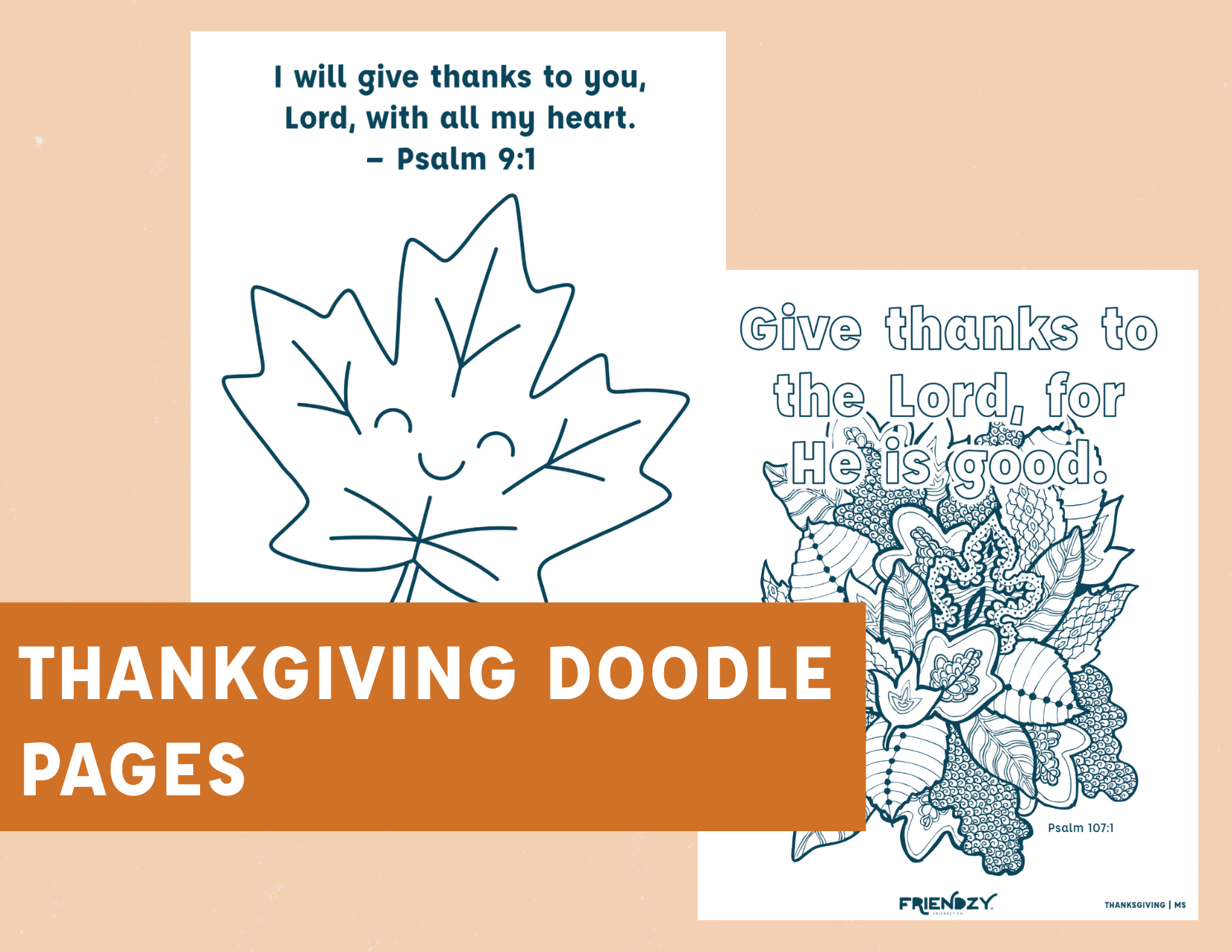
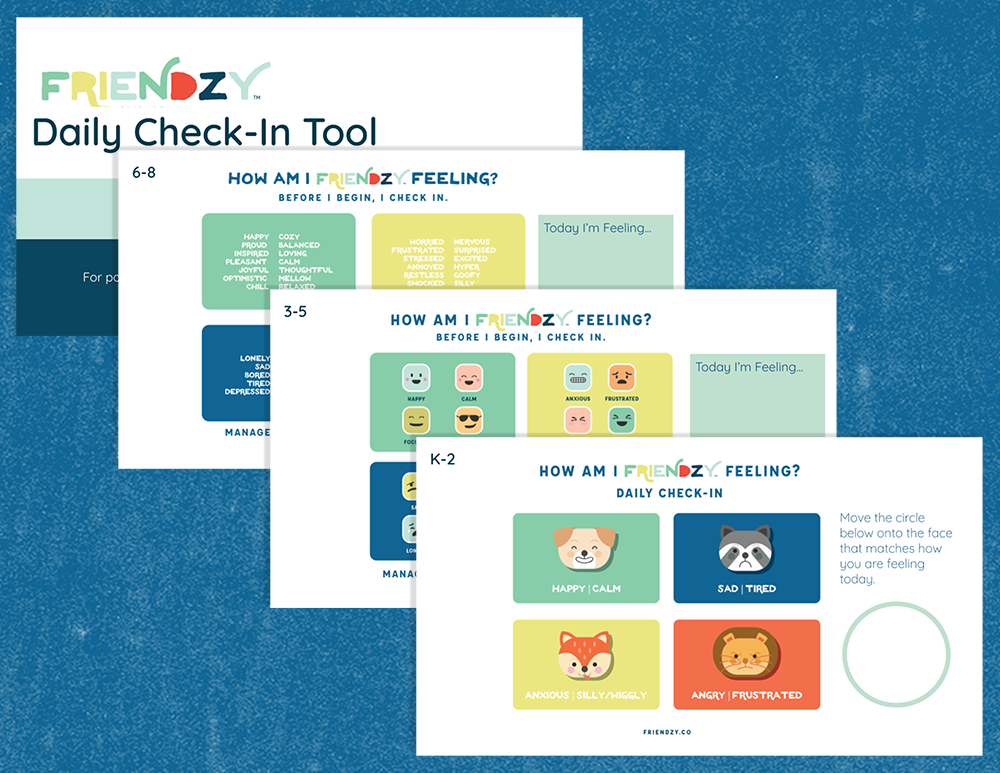
If you're short on time for a full lesson, or need an activity during transition time, download Friendzy's doodle pages! These coloring pages provide faith-based or secular verbiage and are filled with reminders of the season of thankfulness.
Objective: Students will reflect on their emotional "harvest," identify emotions that have been growing inside them, and learn strategies for managing those emotions.
Title: "Harvesting Happy and Sad"
Materials:
Emotion cards with simple pictures (happy, sad, angry, surprised, etc.)
Paper cutouts of fruits/vegetables
Markers/crayons
A large paper tree or basket for display
Introduction (5 minutes):
Explain that just like farmers harvest crops in the fall, we can "harvest" our feelings to understand how we feel.
Ask: “What are some feelings you have? Can we gather them like fruits and vegetables?”
Activity (15 minutes):
Emotion Matching: Show emotion cards and ask students to act out how those feelings might look. Encourage students to share times when they felt those emotions.
Harvest Basket: Give each student a fruit/vegetable cutout. Have them draw or scribble how they feel on their fruit/vegetable (happy faces, sad colors, etc.).
Group Reflection: Students will "harvest" their fruits/vegetables by placing them on the large tree or basket.
Discussion (5 minutes):
Go through the tree/basket and talk about the different emotions "harvested."
Introduce simple self-regulation techniques: "If you feel sad, what can you do to feel better?" (Take deep breaths, talk to a teacher, hug a friend).
Closing (5 minutes):
Sing a song like "If You’re Happy and You Know It" to reinforce emotional recognition.
Title: "What’s Growing Inside? Harvesting Our Emotions"
Materials:
Emotion word cards (happy, sad, frustrated, excited, etc.)
Paper leaves/fruit cutouts
Markers/colored pencils
Journals for reflection (optional for older students)
Introduction (10 minutes):
Discuss the metaphor of harvesting: "Just like plants grow, our feelings grow inside us too. We need to notice what emotions are growing so we can understand and manage them."
Have students share emotions they have felt recently, using the emotion cards as prompts.
Activity (20 minutes):
Harvest Reflection: Give each student a paper fruit or leaf. Ask them to think about an emotion they've been feeling recently.
Emotion Art: On their fruit/leaf, students will write or draw how they've been feeling. Encourage details—what color represents this feeling, what shape, etc.
Class Harvest Display: Students will attach their fruits/leaves to a large “tree” on the board or wall, representing the class’s collective "emotional harvest."
Discussion (10 minutes):
As a class, reflect on the emotions displayed.
Ask: “What do you notice about our harvest? Are there more of certain feelings? How do we deal with these emotions when they grow too big?”
Introduce simple emotional management strategies: deep breathing, counting to 10, talking it out with a friend.
Closing (5 minutes):
End with a calming breathing exercise, such as the "Five Finger Breathing" technique.
Title: "Harvesting Our Emotional Crops: Reflection and Growth"
Materials:
Emotion reflection worksheets
Journals
Large paper (for group work)
Markers
Introduction (10 minutes):
Discuss how emotions, like crops, need to be noticed and cared for.
Ask students to reflect: “What emotions have you been feeling lately? Are these emotions easy to manage, or are they getting overwhelming?”
Activity (20 minutes):
Emotion Reflection: Hand out worksheets or journals and ask students to reflect on their emotional “crops.” They should answer questions like:
What emotions have been growing in me recently?
Which emotions do I want to keep nurturing, and which do I want to manage better?
Group Share: In small groups, have students discuss their reflections. Each group will summarize the types of emotions their group members have been “harvesting.”
Group Discussion (15 minutes):
Create a "class emotional harvest" on a large poster. Groups can add different emotions they’ve discussed.
Discuss: “How can we manage the difficult emotions? What strategies work best when we're feeling overwhelmed or frustrated?”
Emotional Management Techniques (10 minutes):
Teach specific strategies such as mindfulness, journaling, or the "Stop-Think-Act" technique for managing emotions.
Closing (5 minutes):
Students will write one takeaway from the lesson in their journals.
Encourage them to check in with their emotions regularly, just like a farmer checks their crops.
Title: "Emotional Harvest: Cultivating Awareness and Growth"
Materials:
Reflection journals
Emotion management handout
Chart paper/whiteboard
Markers
Introduction (10 minutes):
Introduce the concept of "harvesting" emotions: “Just as we evaluate crops to see how they’re growing, we need to evaluate our emotions. Which feelings have you been 'growing' and how can you manage them?”
Have students pair up and share one emotion that has been “growing” in them lately and how it’s impacting them.
Activity (20 minutes):
Individual Reflection: Students will journal their responses to the following:
What emotions have been prominent in your life recently? Why do you think they’ve been growing?
How have these emotions affected your behavior, relationships, or performance at school?
What strategies have you used to manage them? Are they working?
Class Discussion: Ask for volunteers to share parts of their reflection. Create a list of common emotions students are experiencing.
Managing Emotions (15 minutes):
Introduce the importance of emotional intelligence and emotional management.
Hand out a list of emotional management strategies (such as practicing gratitude, mindful breathing, or reframing negative thoughts).
As a class, brainstorm additional techniques for handling emotions and discuss when and where students might apply these techniques in their lives.
Closing (5 minutes):
End with a moment of reflection: Ask students to think about one emotional strategy they can commit to trying this week.
Encourage ongoing self-check-ins as a way to manage emotions, just like tending to crops.
"Harvesting Emotions": Just as we gather crops in the fall, students can reflect on their emotional "harvest" — what feelings have been growing inside them and how they can identify and manage them.
"Turning Over a New Leaf": Encourage students to reflect on personal growth, areas they want to improve, and changes they want to make as the seasons change.
"Fall Focus: Managing Change": Fall is a season of change, and students can explore how to handle transitions (like changing routines or environments) and practice strategies for adapting to new challenges.
"Cooling Down Like Fall": Teach emotional regulation by using the metaphor of the cooling weather, and how they can cool down when they feel overwhelmed or frustrated.
"A Season for Sharing": Fall often brings holidays and family gatherings (Thanksgiving), making it a great time to discuss empathy and sharing with others, as well as gratitude for the people around us.
"Scarecrows and Standing Together": Scarecrows stand tall together to protect crops. Use this as a symbol for community and how students can stand by one another, showing empathy and support.
"Building Bonds Through Autumn Adventures": Fall activities like pumpkin picking or working in teams to rake leaves can be used as an analogy to highlight the importance of collaboration, communication, and building strong friendships.
"Harvesting Healthy Friendships": Just as farmers harvest crops, students can discuss how to "harvest" healthy relationships by being good friends, using kind words, and resolving conflicts.
"Falling Into Good Choices": Teach students how to make good decisions by using fall as a metaphor, comparing it to raking leaves — you have to decide where to start, and how to gather everything up effectively.
"Choosing the Right Path Like the Leaves Fall": Just as leaves fall in different directions, students can explore how their decisions lead them down different paths and how to weigh consequences thoughtfully.
"Changing Colors, Growing Stronger": Use the changing colors of the leaves to symbolize how change is part of growth and how embracing challenges helps us grow.
"Fall into Learning": Emphasize the idea that mistakes, like leaves falling, are a natural part of learning, and that growth comes from embracing challenges and persisting through difficulties.
"Fall into Kindness": With Thanksgiving around the corner, focus on themes of gratitude and kindness — encourage students to perform acts of kindness, like writing thank-you notes or helping classmates.
"Gathering Together for Good": Similar to how people gather for fall festivals and holidays, students can learn how coming together with empathy and compassion strengthens their classroom and friendships.
"Breathe in the Fall Air": Use fall’s cooling weather to practice mindfulness and deep breathing exercises, encouraging students to take calming breaths, like the cool, crisp autumn air.
"Quiet as a Falling Leaf": Create a calming classroom environment by engaging students in mindfulness activities that focus on the stillness of nature in fall and how they can quiet their minds.
"Reading the Colors of Emotions": Connect emotional awareness to the colors of fall — just as leaves change colors, emotions can shift throughout the day. Help students identify and label their emotions like they identify fall leaves.
"Emotional Harvest": Ask students to think about which emotions they’ve experienced lately and how they can use coping strategies to manage the harder emotions while embracing the positive ones.